 how-to
Why Deep Cleaning Is Necessary for Commercial Spaces
Table of Contents
- Deep Cleaning vs. Regular Cleaning: Understanding the Difference
- Hidden Dirt and Buildup: What Routine Cleaning Leaves Behind
- Health, Hygiene, and Infection Control in Commercial Spaces
- High-Traffic Area Cleaning: Addressing the Dirtiest Zones
- How Often to Deep Clean an Office: Scheduling by Facility Type
- Creating a Commercial Cleaning Checklist for Comprehensive Coverage
- Protecting Your Investment: Asset Life and Workplace Appearance
- Frequently Asked Questions
Last Updated: October 5, 2026
Deep Cleaning vs. Regular Cleaning: Understanding the Difference
Understanding why deep cleaning is necessary for commercial spaces starts with recognizing how it differs fundamentally from routine daily or weekly cleaning.
Regular cleaning covers visible surfaces, sweeping floors, wiping desks, emptying trash.
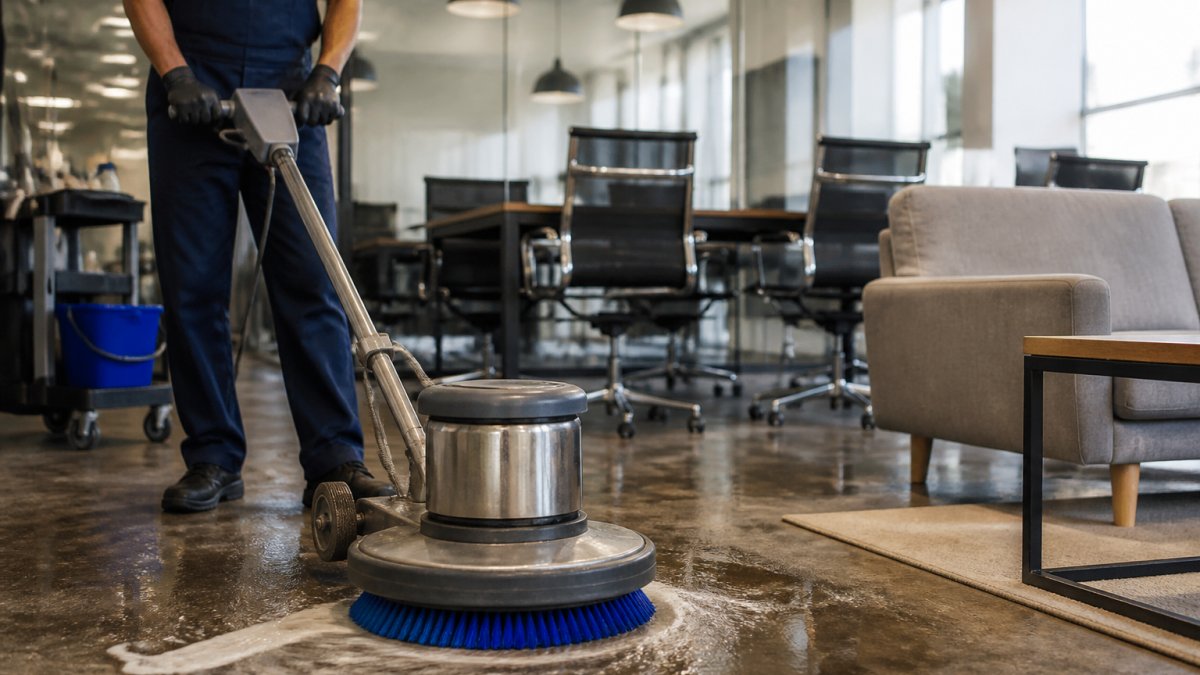
Deep cleaning reaches behind equipment, under desks, inside ventilation grilles, and into corners where dust and bacteria settle.
The difference matters: a clean-looking office isn't truly clean.
Hidden Dirt and Buildup: What Routine Cleaning Leaves Behind
Routine cleaning misses most of what accumulates: dust settles where crews never reach, and bacteria multiplies in areas that look clean.
Here's what gets left behind:
- Dust and debris inside air vents and grilles, these circulate throughout your building and worsen air quality
- Bacteria under desks and chairs, high-touch surfaces accumulate germs from hundreds of people
- Buildup behind equipment and appliances, machines overheat when dust clogs ventilation
- Grime in corners and baseboards, often ignored because they're not immediately visible
This hidden buildup creates real problems: air quality suffers, equipment breaks down faster, surfaces deteriorate, and germs persist.
Deep cleaning removes what routine methods leave behind, specialized equipment reaches tight spaces and chemicals break down stubborn residue, producing a genuinely clean environment rather than one that merely looks clean.
Health, Hygiene, and Infection Control in Commercial Spaces
A clean workplace reduces illness transmission. Germs live on surfaces longer than most people realize. Regular cleaning doesn't eliminate them, deep cleaning does.
This matters especially in medical facilities, shared-workspace offices, and high-traffic areas. Bacteria and viruses settle on:
- Doorknobs and handles
- Keyboards and phones
- Conference room tables
- Break room counters
Regular cleaning touches these once; deep cleaning uses disinfection protocols that kill pathogens.
Employees notice too: a visibly clean workplace improves morale and reduces absenteeism.
For businesses serving clients or patients, cleanliness signals professionalism: a spotless facility builds trust, while visible dirt damages reputation.
High-Traffic Area Cleaning: Addressing the Dirtiest Zones
High-traffic areas accumulate dirt faster than anywhere else: entryways, hallways, and common areas see constant foot traffic, and dirt gets tracked in and ground into floors.
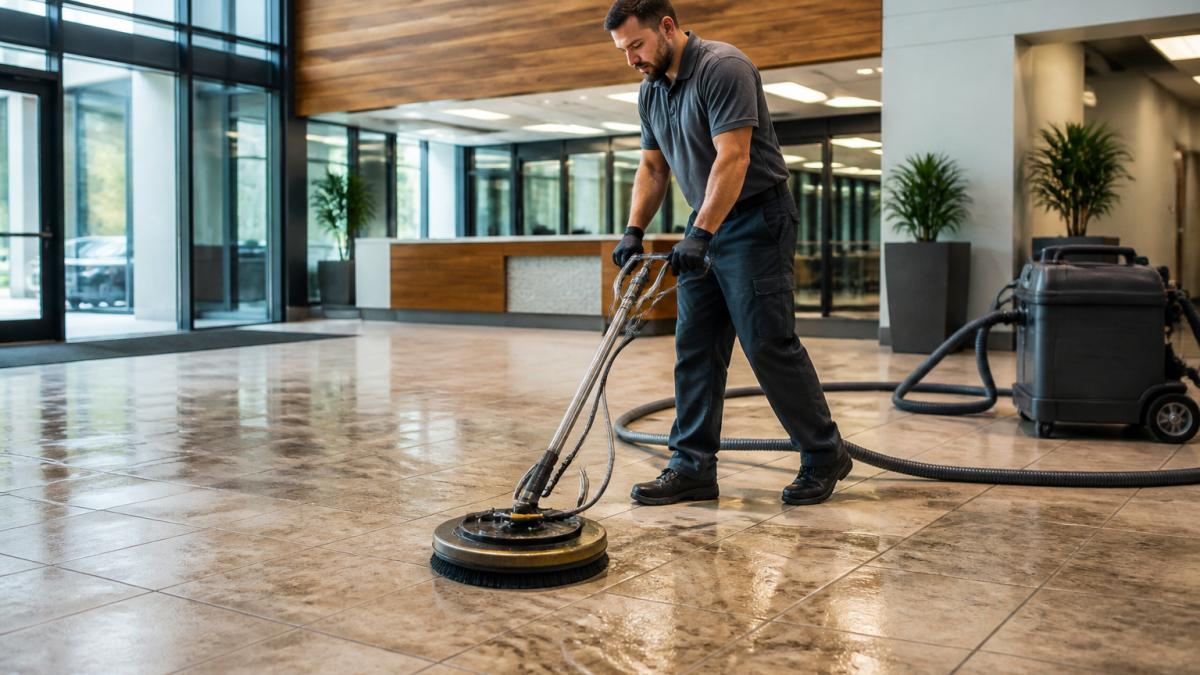
These zones need more frequent and more intensive cleaning than low-traffic areas:
- Entryways and lobbies, first impression areas that collect dirt from outside
- Hallways and corridors, pathways where foot traffic concentrates wear
- Break rooms and kitchens, food residue and spills create buildup
- Restrooms, high-touch surfaces and moisture encourage bacterial growth
Regular cleaning here happens more often but stays shallow; deep cleaning addresses the accumulated grime regular methods miss.
Professional deep cleaning of high-traffic areas includes:
- Stripping and refinishing floors to remove ground-in dirt
- Steam cleaning carpets to extract embedded particles
- Disinfecting all high-touch surfaces thoroughly
- Cleaning baseboards and corners where dirt accumulates
Frequency depends on facility type and usage, a busy office might need high-traffic deep cleaning monthly, a warehouse quarterly.
How Often to Deep Clean an Office: Scheduling by Facility Type
Most guides answer this with a single number, but frequency should fall out of three inputs: how many people use the space, how dirty the work is, and how much a contamination event would cost.
The three inputs that set frequency
1. Occupancy and traffic load. Count daily occupants and visitors, not square footage.
2. Contamination risk of the work. Does the space handle food, patients, chemicals, or biological material, or run dust-generating processes like woodworking or grinding?
3. Cost of a failure. A missed restroom in a dental office is a compliance and reputation problem; a dusty corner in a storage annex is cosmetic.
A practical frequency framework
Use this as a starting point, then adjust after two cycles based on inspection findings.
- Low-traffic professional offices (under ~25 occupants, no food handling, no public walk-in traffic): deep clean every 6 months, with high-touch disinfection monthly.
- Standard corporate offices (25-100 occupants, shared kitchens, meeting rooms, client visits): deep clean quarterly.
- High-density or hot-desk offices (100+ occupants or shared-desk ratios above ~1.5 people per desk): deep clean monthly to every 6 weeks, because surface contact per square foot is far higher.
- Retail and hospitality (public foot traffic, food or beverage service): monthly, with entryways and restrooms on a weekly intensive cycle.
Adjusting the schedule with a simple risk score
Score each zone 1-3 on traffic, contamination risk, and cost of failure, then add the numbers:
- 3-4 points: low priority, deep clean on the base interval.
- 5-6 points: medium, shorten the interval by roughly one step (quarterly becomes every 6-8 weeks).
- 7-9 points: high, put the zone on its own shorter cycle (monthly or more frequent) and add it to the daily high-touch routine.
This mirrors how facility teams prioritize maintenance: put effort where failure costs the most.
When to schedule a deep clean outside the normal cycle
Some events override the calendar entirely:
- After an illness outbreak in the workplace, once the space is clear.
- After construction, renovation, or a move-in, before occupants return.
- After a flooding, leak, or sewage event, once the space is dried and safe to work in.
- Before a client tour, audit, or inspection where appearance or compliance is being judged.
A note on budget trade-offs
Shorter intervals cost more per year but less per visit, since buildup is lighter and work is faster. Stretching intervals saves money on paper until the first restoration job, stripping a neglected floor or replacing a grit-ground carpet costs far more than the cleanings you skipped.
Creating a Commercial Cleaning Checklist for Comprehensive Coverage
A checklist tells the crew what to do, not whether they did it well. Below: a room-by-room task list plus inspection criteria and metrics.
Room-by-room deep cleaning checklist
Work top to bottom and back to front in each room so dust falls onto surfaces you haven't cleaned yet.
Entryways and lobbies
- Clean glass doors, frames, and adjacent partitions inside and out
- Wipe handles, push plates, and intercom or keypad surfaces
- Dust and damp-wipe reception counters, including undersides and edges
- Clean floor mats and the floor beneath them
Open office and workstations
- Dust monitor arms, cable trays, and the tops of partitions
- Wipe keyboards, mice, phones, and shared peripherals with a compatible cleaner
- Clean under and behind desks, including chair casters and base plates
- Vacuum or extract upholstered chairs, focusing on seat and armrest seams
Conference and meeting rooms
- Disinfect table surfaces, edges, and the underside where hands rest
- Clean chair arms, backs, and bases
- Wipe AV equipment, remotes, and cable connections
- Clean whiteboards, trays, and marker residue
Break rooms and kitchens
- Degrease range hoods, filters, and the surfaces around cooking equipment
- Clean inside and behind microwaves, toasters, and coffee stations
- Wipe cabinet fronts, handles, and the tops of upper cabinets
- Clean and sanitize sinks, faucets, and drain surrounds
Restrooms
- Clean and disinfect toilets, urinals, and all surrounding surfaces
- Descale sinks, faucets, and drain covers
- Clean mirrors, partitions, and door hardware
- Restock dispensers and clean the dispensers themselves
Hallways, stairs, and common areas
- Dust and wipe handrails, stair nosings, and wall edges
- Clean baseboards, corners, and the tops of door frames
- Vacuum or extract carpet edges and transition strips
- Wipe elevator buttons, panels, and door tracks
Utility and back-of-house spaces
- Clean around and behind equipment, including ventilation openings
- Wipe shelving, racking, and the tops of storage units
- Sweep and mop under pallets, bins, and storage racks
- Clean floor drains and the areas around them
Inspection criteria: how to verify the work
A checklist without a pass/fail standard is just a wish list. Define what "done" looks like before the crew starts.
- Visual standard: no visible dust on horizontal surfaces at eye level; no streaks on glass; no residue or film on floors; grout lines and corners free of dark buildup.
- Touch standard: a white cloth wiped across a specified surface (top of a partition, a door frame, a shelf edge) comes back clean.
- High-touch standard: every listed high-touch point has been wiped with the appropriate product and allowed the manufacturer's stated dwell time before being touched again.
- Restroom standard: fixtures, mirrors, and floors pass a spot inspection at the start of the business day, not just at the end of the cleaning shift.
Metrics that tell you whether the program is working
Track a small set of numbers over time. Trends matter more than any single reading.
- Inspection score: percentage of checklist items passing on a spot inspection. A common target is 95% or higher on high-touch and restroom items.
- Task completion rate: percentage of scheduled tasks marked complete in the cleaning log. Below 100% on a recurring basis means the schedule is unrealistic or the crew is under-resourced.
- Complaint and work-order trend: number of cleanliness-related complaints or work orders per month. A rising trend usually points to a specific zone or shift, not the whole program.
- Repeat-clean rate: how often the same zone fails inspection two cycles in a row. Repeat failures mean the interval, the method, or the training needs to change.
- Consumables usage: restroom and kitchen supply consumption per occupant. A sudden jump can signal waste, theft, or a change in occupancy.
Turning findings into schedule changes
Use inspection data to adjust the program, not just grade it:
- One zone failing repeatedly → shorten that zone's interval or add a mid-cycle touch-up.
- Complaints clustered in one shift → review staffing, training, or the sequence of tasks.
- Inspection scores high but complaints rising → the checklist may be missing a surface people actually notice.
- Scores falling across the board → the schedule has outgrown the space; re-run the frequency framework.
Protecting Your Investment: Asset Life and Workplace Appearance
Deep cleaning extends the life of your facility and equipment, preventing premature wear.
Professional deep cleaning protects your investment:
- Flooring, regular deep cleaning removes abrasive particles that scratch and wear surfaces
- Carpets, deep extraction removes embedded dirt that breaks down fibers
- Equipment, clean ventilation prevents overheating and extends machine life
- Furniture, regular cleaning prevents staining and fabric deterioration
- Walls and paint, removing buildup prevents permanent discoloration
Appearance also affects business outcomes: clients, patients, and employees judge cleanliness, a well-maintained facility signals professionalism, and visible neglect damages reputation.
First impressions matter. A spotless lobby conveys attention to detail.
Deep cleaning maintains professional appearance while protecting physical assets. It's an investment in both image and longevity.
Understanding why deep cleaning is necessary for commercial spaces reveals that it isn't optional, it's essential.
At Broughton Commercial Cleaning, we understand the unique cleaning needs of offices, medical facilities, industrial spaces, and other commercial environments. We offer flexible scheduling, early morning, daytime, or overnight service, to minimize disruption to your operations. Contact Broughton Commercial Cleaning today to discuss a deep cleaning plan tailored to your facility's specific needs and get a free, plain-language quote with no hidden fees.
Frequently Asked Questions
What is the difference between deep cleaning and routine cleaning?
Routine cleaning handles daily surfaces and visible dirt: vacuuming floors, wiping desks, emptying trash. Deep cleaning targets hidden areas, buildup, and disinfection: behind equipment, under desks, ventilation grilles, baseboards, and high-touch surfaces. Routine cleaning maintains appearance; deep cleaning removes bacteria, allergens, and stubborn stains that accumulate over weeks or months.
How often should a commercial space be deep cleaned?
Frequency depends on facility type and foot traffic. High-traffic offices typically need deep cleaning monthly or quarterly. Medical facilities and food-service areas require more frequent cycles due to infection control standards. Warehouses and industrial units may need seasonal deep cleaning. Lower-traffic spaces like storage areas can operate on a 6-month schedule. Assess your specific risk level and occupancy to set an appropriate deep cleaning frequency.
Why is deep cleaning necessary if we already have daily janitorial cleaning?
Daily cleaning removes surface dirt but cannot address deep buildup, bacteria in crevices, or disinfection of high-touch surfaces at the level required for health and safety. Hidden dirt accumulates in ventilation systems, under furniture, and inside equipment, areas routine cleaning skips. Deep cleaning prevents infectious disease transmission, reduces workplace odors, protects floor and surface life, and maintains the professional appearance that daily cleaning alone cannot sustain.
Can deep cleaning improve employee productivity and health?
Yes. A thoroughly cleaned environment reduces allergens, dust, and airborne pathogens that trigger illness and absenteeism. Employees report higher morale and focus in clean, fresh-smelling spaces. Visible cleanliness and the removal of hidden bacteria lower stress and create confidence in workplace safety. Studies show that workplace cleanliness directly correlates with employee retention, attendance, and job satisfaction.