 ultimate-guide
Cleaning Companies Commercial: How to Choose a Vendor
Table of Contents
- What Commercial Cleaning Companies Actually Do
- How to Vet Cleaning Companies Commercial Buyers Can Trust
- Understanding Janitorial Services Cost and Pricing Models
- What Belongs in a Commercial Cleaning Contract Template
- Building an Office Cleaning Checklist That Works
- Technology, Sustainability, and Compliance in Modern Commercial Cleaning
- Conclusion: Choosing the Right Commercial Cleaning Partner
- Frequently Asked Questions
Last Updated: September 18, 2026
What Commercial Cleaning Companies Actually Do
Cleaning companies commercial buyers rely on handle the recurring sanitation, maintenance, and hygiene work that keeps a business running safely and looking sharp. At Broughton Commercial Cleaning, we've spent decades doing exactly this work for offices, medical practices, warehouses, and construction sites across the metro area, and the scope is broader than most buyers expect when they first start shopping.
Core Services: Daily Maintenance to Deep Cleaning
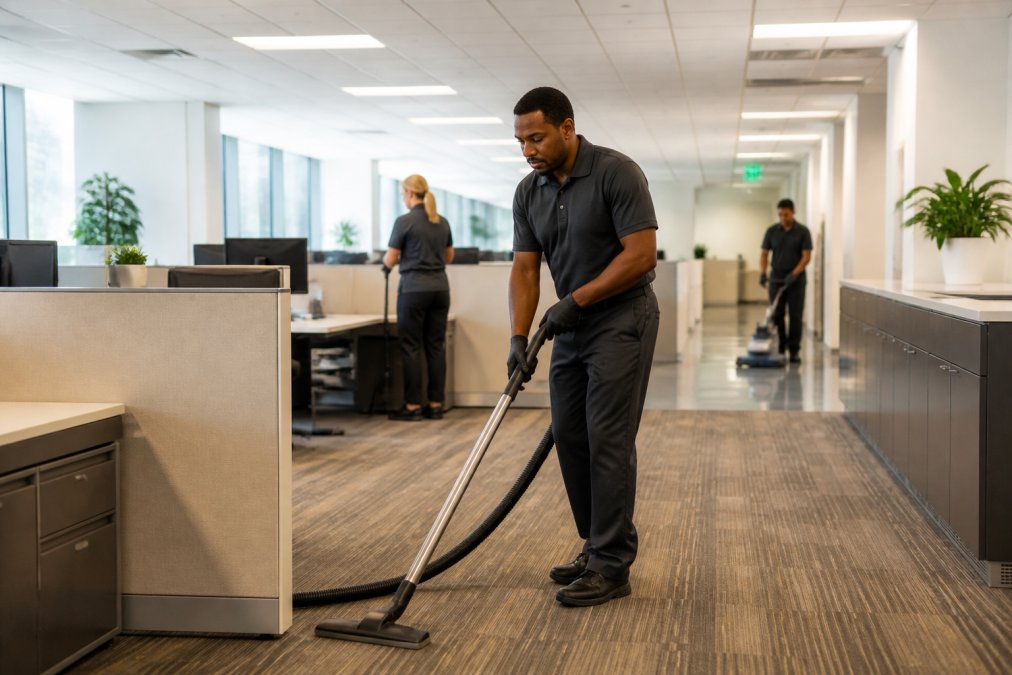
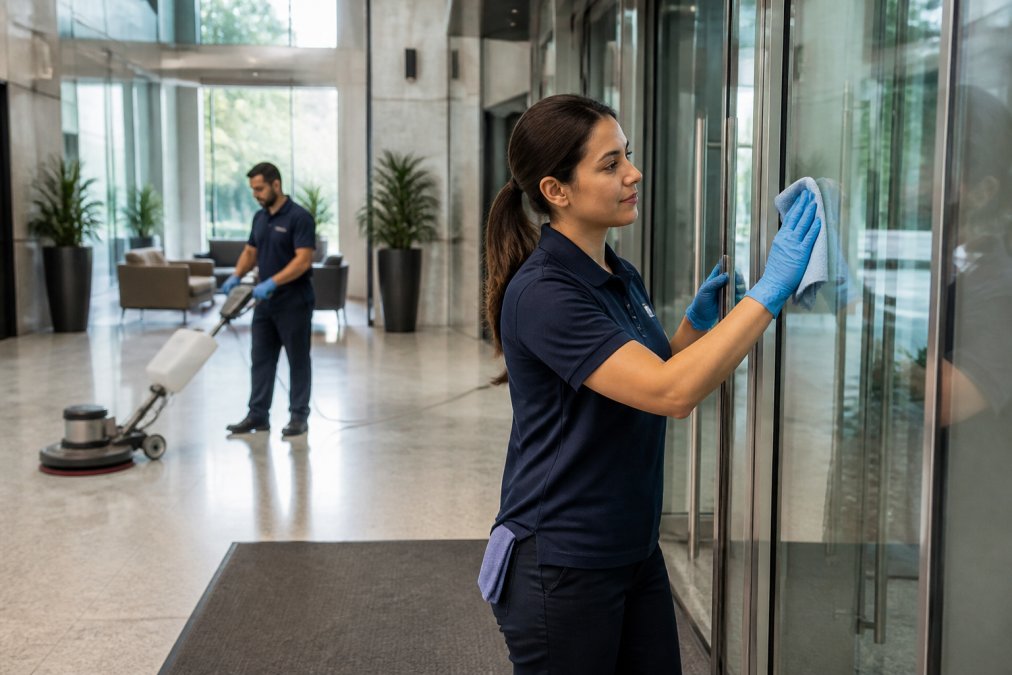
Daily maintenance covers the tasks your staff and visitors notice immediately when they're missed: trash removal, restroom sanitation, vacuuming, surface wiping, and high-touch point disinfection on door handles, elevator buttons, and shared equipment. A common mistake buyers make is treating these as interchangeable with deep cleaning. They aren't. Daily work maintains a baseline; deep cleaning resets it.
Specialized Cleaning by Industry
Different facilities carry different risks, and a provider that treats them all the same is a liability. Medical facility cleaning requires infection control protocols, hazmat handling, and restroom sanitation standards that go well beyond general office work. Industrial cleaning and post-construction cleanup involve dust, debris, and equipment that standard crews aren't equipped for.
How to Vet Cleaning Companies Commercial Buyers Can Trust
Vetting a commercial cleaning vendor comes down to three things: verifiable credentials, real references, and a walkthrough that forces the provider to commit to specifics. Skip any one of them and you're relying on a sales pitch.
Licensing, Insurance, and Background Checks
Any legitimate provider should be licensed, insured, and bonded, and should be able to produce certificates on request. The one that matters most for offices handling sensitive information is background-checked staff. A crew member without a background check is an unvetted person with after-hours access to your files, equipment, and server rooms.
References and Site Walkthroughs
References should come from facilities similar to yours, not a generic list. A medical practice asking for references from other medical practices will learn far more than one accepting a restaurant reference. Ask what went wrong and how the provider handled it; every long-term contract has had at least one problem, and the response tells you more than the praise.
Understanding Janitorial Services Cost and Pricing Models
Janitorial services cost depends on square footage, frequency, facility type, and scope, which is why credible providers quote after a walkthrough rather than over the phone. Broughton Commercial Cleaning publishes upfront written quotes in plain language so you can compare bids without decoding line items, and you can review current rates on our pricing page.
Most contracts use one of three models:
| Pricing Model | How It Works | Best For |
|---|---|---|
| Flat monthly fee | Fixed rate for defined scope | Stable, predictable facilities |
| Per-square-foot | Rate multiplied by cleanable area | Comparing bids across vendors |
| Per-service or hourly | Charged per visit or per hour | Irregular or project-based work |
What Actually Drives the Number
Four variables move a quote more than anything else, and understanding them is how you tell a fair bid from a lowball:
- Cleanable square footage, not total square footage. Storage rooms, server closets, and locked mechanical spaces usually aren't cleaned nightly, so they shouldn't be priced as if they are. Ask a vendor to show you the cleanable-area figure they used.
- Frequency and production rate. A crew cleans a predictable number of square feet per hour depending on task mix. Restrooms and breakrooms are slow; open office carpet is fast. A quote that assumes office-wide production rates for a restroom-heavy facility is underpriced and will be under-delivered.
- Task mix. Trash and vacuuming are cheap per visit. Restroom sanitation, floor care, and high-touch disinfection are not. A bid that bundles them at one blended rate hides where the labor actually goes.
- Building access and hours. Day-porter coverage, badge and escort requirements, freight-elevator scheduling, and after-hours security check-in all add labor time that a phone quote can't capture.
How to Compare Bids Line by Line
Watch for three common pricing traps:
- The periodic-services exclusion. Floor stripping and waxing, carpet extraction, and window washing are often quoted separately. Confirm whether they're inside the monthly fee or billed per event.
- The consumables question. Paper products, hand soap, liners, and restroom supplies may or may not be included. This single line can swing a contract meaningfully.
- The annual escalator. Most multi-year agreements include a yearly increase. Get the percentage and the trigger in writing before you sign.
U.S. Bureau of Labor Statistics data on janitorial services employment and wage trends
What Belongs in a Commercial Cleaning Contract Template
A commercial cleaning contract template should lock down scope, schedule, standards, and remedies before work begins. The four sections below cover the essentials; skip any and you'll be negotiating from a weak position later.
- Scope of work: Exact tasks, frequencies, and areas covered, with exclusions listed explicitly
- Service level agreement: Measurable standards for each task and how performance is verified
- Pricing and terms: Rate, payment schedule, annual increases, and what triggers additional charges
- Insurance and liability: Coverage requirements, bonding, and the process for damage or injury claims
Building an Office Cleaning Checklist That Works
An office cleaning checklist works when it separates daily, weekly, and periodic tasks and assigns each to a specific area. Vague checklists produce vague results, because "clean restrooms" means something different to every crew member.
A practical structure:
- Daily: Trash removal, restroom sanitation, high-touch disinfection, vacuuming high-traffic areas
- Weekly: Detailed dusting, floor mopping, glass and mirror cleaning, breakroom deep wipe-down
- Monthly: Vent and light fixture dusting, baseboard cleaning, furniture upholstery vacuuming
- Quarterly or seasonal: Carpet extraction, floor stripping and waxing, window washing
Technology, Sustainability, and Compliance in Modern Commercial Cleaning
Modern commercial cleaning has moved toward measurable methods: HEPA filtration vacuums that capture fine particles, microfiber technology that reduces chemical use while cleaning more effectively, and disinfection protocols tied to documented dwell times. These aren't marketing flourishes; they change outcomes in medical, industrial, and food-adjacent facilities.
Technology That Changes the Outcome
The tools worth asking about are the ones that produce a record you can audit:
- Digital inspection reports. Crews photograph completed areas and log them against the checklist, so you get a timestamped record instead of a verbal assurance.
- Supply and inventory tracking. Barcode or RFID systems on dispensers and chemical stock flag reorder points before a restroom runs out mid-day.
- Electrostatic and UV-C disinfection. Useful in medical and food-adjacent spaces, but only when the provider can explain dwell time, surface compatibility, and safe re-entry.
- Connected floor-care equipment. Buffers and extractors with usage telemetry show whether the scheduled floor work actually happened.
Sustainability Certifications Worth Asking About
Green cleaning products, reduced packaging, and documented waste diversion are reasonable asks, and providers serious about the category will have answers ready. The specific credentials to look for:
- Green Seal and UL ECOLOGO certify cleaning products and, in some cases, services against published environmental standards.
- EPA Safer Choice identifies products whose ingredients meet the agency's safer-chemistry criteria.
- LEED credits for green cleaning are relevant if your building is pursuing or maintaining certification, ask whether the provider can supply the documentation your facility manager needs.
- ISSA Cleaning Industry Management Standard (CIMS) and CIMS-GB are management-system certifications that indicate a provider has documented processes rather than ad-hoc practices.
Compliance, Insurance, and Liability
Compliance and liability deserve equal weight. Occupational health and safety requirements, waste management rules, and industry-specific standards all shape what a legitimate provider must do. A vendor that can't explain how it handles regulated waste or which safety certifications its staff hold is a risk you're accepting on paper.
- OSHA compliance. Hazard communication (SDS access for every chemical on site), bloodborne pathogen training for crews handling restroom and medical waste, and PPE protocols.
- Insurance coverage. General liability and workers' compensation at limits appropriate to your facility, with you named as an additional insured where your lease or risk team requires it.
- Bonding. A fidelity bond covering employee dishonesty, the coverage that matters when after-hours crews have access to your space.
- Regulated waste handling. Medical, pharmaceutical, and certain industrial waste streams have their own disposal rules; confirm the provider's process and documentation.
Conclusion: Choosing the Right Commercial Cleaning Partner
The hardest part of hiring a cleaning vendor isn't finding one, it's finding one that shows up consistently and handles your specific environment without cutting corners. Broughton Commercial Cleaning handles that with decades of experience, customizable janitorial cleaning services, flexible day, evening, and overnight scheduling, and background-checked, licensed, insured, and bondable staff. Get started with Broughton Commercial Cleaning and get a spotless, hazard-free facility backed by an upfront written quote in plain language.
Frequently Asked Questions
What is the difference between janitorial services and commercial cleaning?
Janitorial services typically cover routine, recurring tasks like trash removal, restroom sanitation, and vacuuming. Commercial cleaning is broader and can include specialized work such as floor stripping and waxing, carpet extraction, post-construction cleanup, and high-touch point disinfection. Many providers offer both under one contract, so the distinction often comes down to scope and frequency rather than the company itself.
How do you vet a professional commercial cleaning company?
Start by confirming the company is bonded and insured, then ask whether staff are background-checked. Request references from facilities similar to yours, ideally in the same industry. Review the proposed service level agreement for specifics on tasks, frequency, and response times. A site walkthrough before signing lets you see how they assess your space and whether their plan matches your actual needs.
How often should a professional cleaning company service an office?
Most offices need daily or at least three-times-weekly service for restrooms, breakrooms, and high-touch surfaces. Lower-traffic spaces may only require weekly deep cleaning. Medical facilities, industrial sites, and buildings with shift work often need daily or overnight coverage. The right schedule depends on square footage, occupant density, and whether you have sensitive areas like server rooms or clinics.
What should be included in a commercial cleaning contract template?
A solid contract should list the exact scope of work, cleaning frequencies, and which tasks fall outside the agreement. Include the service level agreement with measurable standards, insurance and bonding details, notice periods for termination, and a process for handling complaints or missed areas. Pricing structure, whether flat monthly or per-service, should be stated in plain language with no hidden fees.