 ultimate-guide
Medical Cleaning Services Pricing Guide for 2026
Table of Contents
- What Drives Medical Cleaning Services Pricing in 2026
- Medical Office Cleaning Cost Per Square Foot: What the Numbers Look Like
- OSHA Compliant Medical Cleaning Checklist: What Your Quote Should Cover
- Contract vs. Ad-Hoc Cleaning: Which Pricing Model Fits Your Facility
- Janitorial Service Contract Negotiation Tips for Facility Managers
- How to Evaluate a Medical Cleaning Provider: A Step-by-Step Process
- Frequently Asked Questions
Last Updated: October 4, 2026
What Drives Medical Cleaning Services Pricing in 2026
Medical cleaning pricing is not a single rate; it is the sum of labor, compliance risk, and specialized equipment required for a clinical environment, which is why medical cleaning pricing varies so widely.
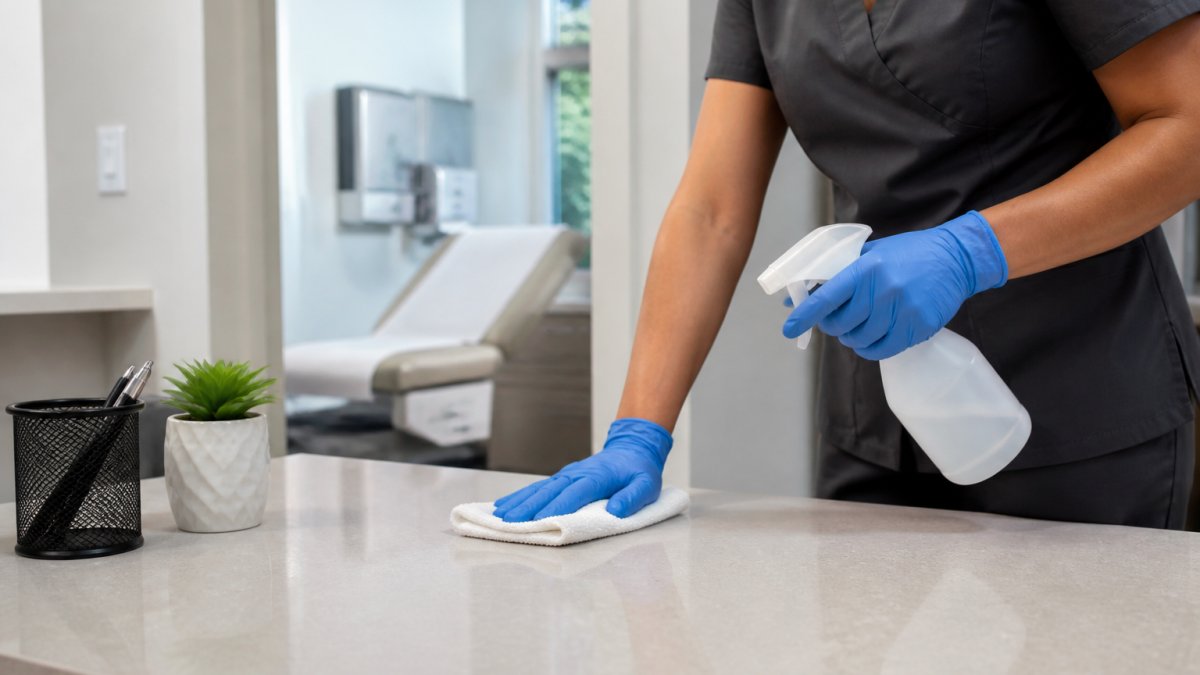
The biggest mistake facility managers make is treating a medical office like a standard commercial space. It is not. A waiting room and an exam room may occupy the same square footage, but the latter demands medical-grade disinfectants, longer dwell times, and documented compliance with CDC and OSHA standards.
The Eight Cost Variables That Move Every Quote
Eight factors separate a baseline janitorial bid from a true medical cleaning contract:
- Facility size and layout: Open-plan spaces clean faster than segmented clinical rooms.
- Cleaning frequency: Daily service costs more than three-times-weekly, but less per visit.
- Biohazard handling: Sharps disposal and regulated waste removal add specialized labor.
- Surface types: Porous materials require different sanitization protocols than sealed surfaces.
- Compliance documentation: Auditing and reporting add administrative hours.
- Labor intensity: High-touch point disinfection is slower than floor care.
- Equipment requirements: Hospital-grade disinfectants and HEPA filtration cost more than standard supplies.
- Scheduling windows: Overnight and weekend crews carry premium labor rates.
Medical Office Cleaning Cost Per Square Foot: What the Numbers Look Like
Medical cleaning rates often vary significantly depending on the clinical intensity of the environment. A model that separates facilities into pricing tiers defined by clinical intensity, then expresses cost as a per-square-foot-per-visit range plus a monthly minimum, can provide a clearer picture.
| Tier | Facility Profile | Typical Cost per Sq Ft per Visit | Typical Monthly Minimum | Primary Cost Driver |
|---|---|---|---|---|
| 1, Administrative | Waiting rooms, front office, records storage, staff break rooms | $0.08 - $0.14 | $600 - $1,200 | Standard surface disinfection, restroom care, floor maintenance |
| 2, Outpatient Clinical | Exam rooms, consult suites, phlebotomy, imaging, dental operatories | $0.16 - $0.28 | $1,400 - $3,500 | High-touch disinfection between patients, EPA-registered medical-grade disinfectants, regulated waste handling |
| 3, Procedure / Surgical | Operating rooms, procedure suites, sterile processing, recovery bays | $0.30 - $0.55+ | $4,000 - $12,000+ | Terminal cleaning, sterilization support, biohazard decontamination, compliance auditing and documentation |
These are per-visit figures, not monthly totals. A 3,000-square-foot Tier 2 practice cleaned five nights per week is not paying 3,000 × $0.22 once, it is paying that rate on every visit, which is why the monthly minimum matters as much as the per-square-foot number.
Why the Same Square Footage Produces Different Quotes
Two 3,000-square-foot practices can differ by thousands of dollars annually. The variables that move the number most are:
- Treatment-room count. Each exam or procedure room adds a between-patient disinfection cycle. A practice with ten rooms carries roughly five times the high-touch labor of a practice with two, even at identical square footage.
- Patient volume. Higher daily census means more disinfection cycles per room per day, not just more rooms.
- Regulated waste stream. Facilities that generate sharps, blood-soaked materials, or pharmaceutical waste pay for compliant packaging, manifesting, and pickup, costs that administrative suites never incur.
- Scheduling window. Overnight and weekend crews carry premium labor rates. A facility that can accept early-evening service often pays less for the same scope.
- Compliance documentation. Auditing, service-level reporting, and inspection-ready logs add administrative hours that a general janitorial bid does not include.
How to Compare Bids Without a Flat Rate
Comparison of bids often happens at the line-item level. Ask every bidder for the same four numbers:
- Per-visit rate for your facility type and frequency.
- Monthly minimum or contract floor.
- Add-on pricing for biohazard pickup, terminal cleaning, and post-construction cleanup.
- Price escalation terms for year two and beyond.
When those four numbers are side by side, the spread between quotes usually resolves into a clear explanation: one bidder may have priced a different scope for a facility, or excluded regulated waste handling entirely. That is the comparison that actually protects your budget.
OSHA Compliant Medical Cleaning Checklist: What Your Quote Should Cover
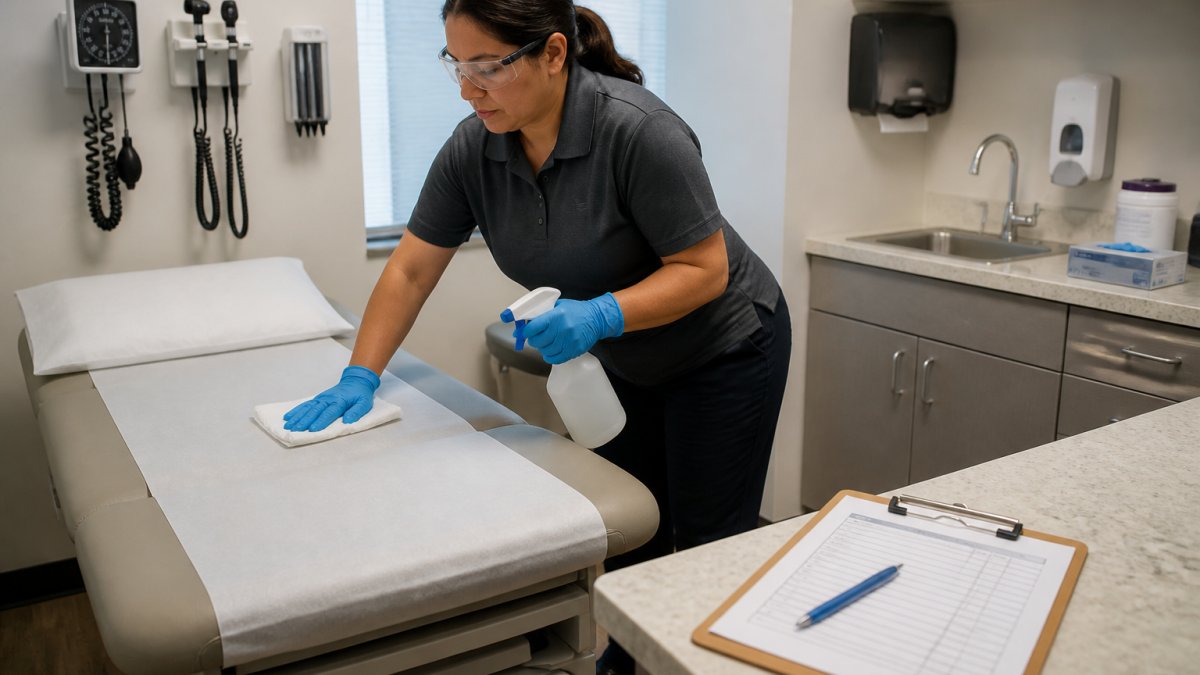
An OSHA compliant medical cleaning checklist is the document that separates a serious medical contractor from a general janitorial provider, and it is also the document that explains why a compliant bid costs more.
| Checklist Requirement | Regulatory Basis | Cost Line It Drives |
|---|---|---|
| Written bloodborne pathogens exposure control plan | OSHA bloodborne pathogens standard, 29 CFR 1910.1030 | Administrative labor, plan maintenance, annual review |
| Hepatitis B vaccination offered to cleaning staff with occupational exposure | OSHA bloodborne pathogens standard | Employer-paid vaccination program |
| PPE provided at no cost to workers (gloves, eye protection, gowns as needed) | OSHA PPE standards | Consumable supplies, sizing and replacement |
| Sharps handling and regulated medical waste segregation | OSHA bloodborne pathogens standard; state medical waste rules | Specialized containers, manifesting, licensed hauling |
| EPA-registered hospital-grade disinfectants with labeled dwell times | EPA registration and label directions | Product cost premium over general-purpose cleaners |
| High-touch surface disinfection between patients | CDC environmental cleaning guidance for healthcare settings | Labor minutes per room per cycle |
| Restroom and floor care using cross-contamination prevention methods | CDC environmental cleaning guidance | Equipment (color-coded tools, microfiber), training time |
| Hand hygiene station restocking and surface disinfection | CDC hand hygiene guidance | Consumables, route time |
| Compliance auditing and service-level reporting | Facility policy and accreditation survey readiness | Administrative hours, documentation software |
| Staff safety training and recordkeeping | OSHA training and recordkeeping requirements | Paid training hours, records retention |
What to Ask Before You Accept a Bid
Use the checklist as an interview script, not just a document review. Ask each bidder:
- Can you produce your written bloodborne pathogens exposure control plan for review?
- Which EPA-registered disinfectants will you use, and what are the labeled dwell times?
- How do you segregate and manifest regulated medical waste, and who hauls it?
- What safety training do your staff complete, and how is it documented?
- How do you audit your own work, and what reporting do I receive each month?
A provider that answers all five with specifics is priced for compliance. A provider that answers vaguely is priced for appearance, and the difference shows up the first time an inspector, an accreditation surveyor, or a patient-safety incident forces the question.
Contract vs. Ad-Hoc Cleaning: Which Pricing Model Fits Your Facility
A commercial cleaning contract locks in predictable monthly pricing and priority staffing, while ad-hoc service offers flexibility at a higher per-visit rate. Most medical facilities benefit from a contract because infection control depends on consistency, and consistency depends on a crew that knows your space.
Ad-hoc cleaning suits short-term needs: post-renovation cleanup, a one-time deep cleaning, or a facility preparing for inspection. Contract pricing suits ongoing clinical environments where hygiene standards, compliance auditing, and preventative maintenance must happen on a schedule. The trade-off is straightforward:
| Model | Best For | Pricing Behavior |
|---|---|---|
| Contract | Ongoing clinical operations | Predictable monthly rate |
| Ad-hoc | One-time or seasonal needs | Higher cost per visit |
For a 24/7 operation, a contract with defined overnight coverage beats ad-hoc scheduling every time. You cannot run a clinical environment on call-in cleaning.
Janitorial Service Contract Negotiation Tips for Facility Managers
Janitorial service contract negotiation tips matter most in the clauses nobody reads until something goes wrong. The price is only one number in a document that governs reliability, liability, and exit terms for years. Negotiate the terms below before you negotiate the rate.
Five Clauses to Read Before You Sign
- Scope of work: The exact tasks, frequencies, and areas covered. Vague scope invites disputes.
- Service level agreement: Response times for complaints, missed visits, and quality issues.
- Insurance and bonding: Confirm liability coverage and bonding. SBA guidance on business insurance explains why bonded, insured vendors protect you from theft and damage claims.
- Termination terms: Notice period and penalties for early exit.
- Price escalation: How and when rates increase, and whether increases require written approval.
How to Evaluate a Medical Cleaning Provider: A Step-by-Step Process
Evaluating a medical cleaning provider is a five-step process that starts with compliance and ends with a written, itemized quote. Skip any step and you risk hiring a vendor who cannot handle clinical environments.
- Verify credentials: Confirm licensing, insurance, bonding, and safety certifications.
- Request medical-specific references: Ask for facilities with similar clinical intensity, not just similar square footage.
- Review the compliance checklist: Ensure OSHA bloodborne pathogens protocols and biohazard decontamination procedures are documented.
- Walk the facility together: A provider who quotes without a walkthrough is guessing.
- Compare itemized quotes: Line-by-line, not lump-sum.
A provider that cannot answer how it handles sharps disposal, cross-contamination prevention, or overnight staffing has not worked in healthcare. That is the real test.
Frequently Asked Questions
What factors influence the cost of medical cleaning services?
Medical cleaning pricing depends on square footage, cleaning frequency, the mix of clinical versus non-clinical space, biohazard handling requirements, and labor rates. Facilities with exam rooms, surgical suites, or sharps disposal needs pay more per square foot than standard office space because those areas require medical-grade disinfectants, longer dwell times, and staff with specialized training. Overnight or weekend scheduling can also add a premium to the hourly rate.
How much does medical office cleaning cost per square foot?
Cost per square foot varies by market and facility type. Facilities with high-acuity spaces typically pay more. The number that matters is your fully loaded rate: labor, supplies, equipment, and compliance documentation. Ask each provider to break their quote into those line items so you can compare quotes on equal footing.
Does medical facility cleaning require specialized certifications?
OSHA does not issue a single cleaning certification, but it does require employers to train workers on bloodborne pathogens under 29 CFR 1910.1030, which covers anyone who may contact blood or other potentially infectious materials. Providers serving medical facilities should be able to document that training, plus safe handling of medical-grade disinfectants and sharps containers. Ask for training records before signing a contract.
What is the difference between standard janitorial and medical-grade disinfection?
Standard janitorial work removes visible soil and applies general-purpose cleaner. Medical-grade disinfection uses EPA-registered products with labeled kill claims for specific pathogens, follows required dwell times, and targets high-touch surfaces like exam tables, door handles, and blood pressure cuffs. The distinction matters for infection control: a surface that looks clean is not necessarily disinfected, and clinical environments need documented disinfection, not just appearance.
Are there specific OSHA requirements that impact cleaning costs?
Yes. OSHA's bloodborne pathogens standard (29 CFR 1910.1030) requires an exposure control plan, hepatitis B vaccination offers, PPE, and regulated waste procedures for workers with occupational exposure risk. Those requirements add training hours, PPE, and disposal costs to a medical cleaning contract. Providers who build them into their quote are pricing accurately; providers who skip them are passing risk to your facility.
How often should medical facilities be professionally cleaned?
Most medical offices schedule daily cleaning of exam rooms, restrooms, and waiting areas, with deep cleaning or terminal disinfection on a weekly or monthly cycle depending on patient volume and the type of care provided. Surgical and procedure areas typically require terminal cleaning between cases or at end of day. Your cleaning frequency should be written into the contract with specific room-by-room tasks, not left to a general scope statement.
Medical cleaning pricing is complex because clinical environments are complex, and no two facilities carry the same risk profile. Broughton Commercial Cleaning builds transparent, itemized quotes for medical practices, with background-checked, licensed, insured, and bondable crews, flexible overnight scheduling, and written compliance protocols in plain language. Get started with Broughton Commercial Cleaning and receive a clear, upfront quote built around your facility's actual requirements.