 listicle
5 Essential Steps for Commercial Cleaning Checklist
Table of Contents
- Step 1: Preparation and Planning for Your Commercial Cleaning Checklist
- Step 2: Daily Office Cleaning Tasks and Routines
- Step 3: Weekly Cleaning Tasks and Restroom Sanitation
- Step 4: Trash Removal, Recycling, and Waste Management
- Step 5: Inspection, Quality Verification, and Staff Communication
- Office Cleaning Checklist for Managers: Implementation and Accountability
- Creating a Commercial Cleaning Schedule That Works
- Frequently Asked Questions
Last Updated: October 11, 2026
Step 1: Preparation and Planning for Your Commercial Cleaning Checklist
A successful commercial cleaning checklist starts with thorough planning to ensure your team works efficiently and understands expectations.
Assessing Your Facility and Cleaning Frequency Needs
Map your facility to identify high-traffic areas, sensitive zones, and specialized spaces. Determine baseline cleaning frequencies for each zone, one schedule does not work everywhere.
Office buildings require daily restroom sanitization; medical facilities need infection-control protocols; industrial spaces demand tailored dust removal. Your commercial cleaning checklist must reflect these distinctions.
Selecting Commercial Cleaning Equipment and Supplies
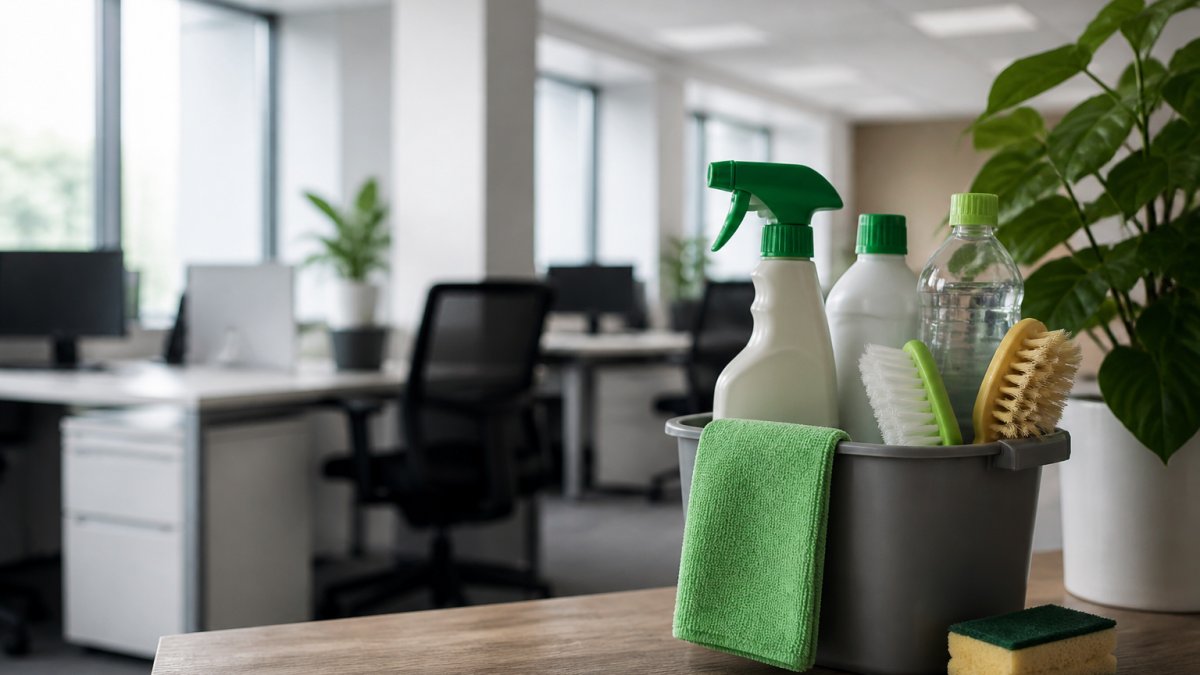
The right equipment, microfiber cloths, high-quality disinfectants rated for your facility type, and appropriate PPE, makes your team faster and more thorough.
Invest in quality supplies; cheap mops spread bacteria and low-grade disinfectants miss pathogens. Your commercial cleaning checklist should specify products by surface: glass cleaner for windows, disinfectant for high-touch surfaces, pH-neutral cleaner for floors.
Step 2: Daily Office Cleaning Tasks and Routines
Daily cleaning maintains baseline hygiene and prevents problems from compounding. Your commercial cleaning checklist should clearly separate daily tasks from weekly or monthly ones.
High-Touch Surface Disinfection
High-touch surfaces spread illness fastest. Door handles, light switches, elevator buttons, and push bars require daily disinfection.
Use hospital-grade disinfectant, apply it, let it sit for the contact time specified on the label (typically 30 seconds to 10 minutes), then wipe thoroughly.
Often-missed high-touch surfaces include phone receivers, keyboard keys, mouse devices, armrests, refrigerator handles, microwave doors, and faucet handles. Your commercial cleaning checklist should list these explicitly.
Desk and Workstation Cleaning
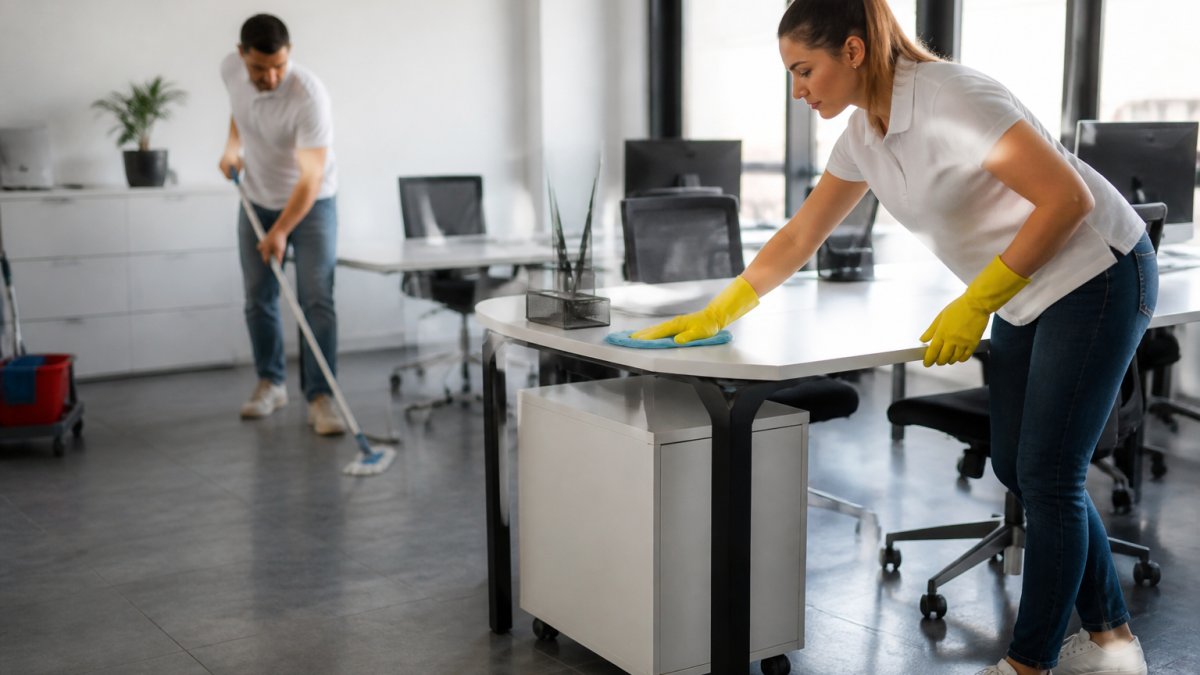
Ask staff to clear surfaces before cleaning. Dust all surfaces first (keyboards, monitors, desk surfaces, shelves), then wipe with appropriate cleaner. For electronics, use dry microfiber cloths or electronics-specific wipes. Your commercial cleaning checklist should specify: dust first, then sanitize.
Step 3: Weekly Cleaning Tasks and Restroom Sanitation
Weekly tasks address areas that accumulate dirt quickly and require more intensive cleaning than daily routines. Your commercial cleaning checklist should clearly mark these as weekly, not daily.
Restroom Cleaning and Sanitation Standards
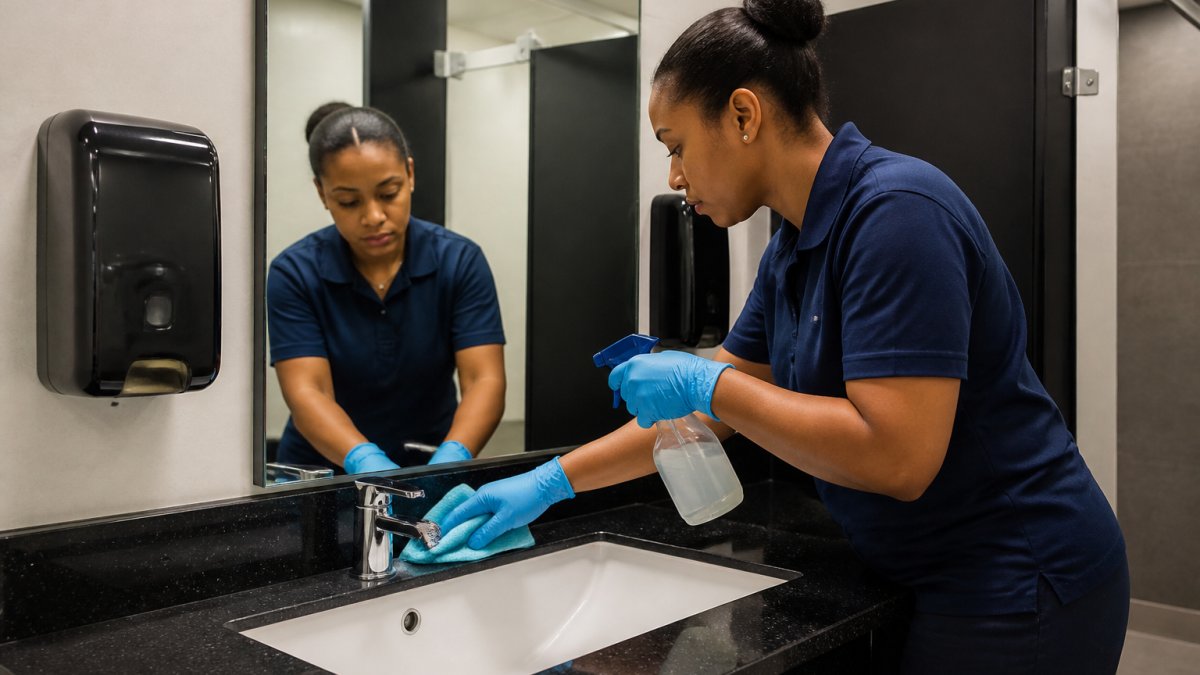
Restrooms are highest-risk for pathogen transmission. Your commercial cleaning checklist must prioritize restroom sanitation. Clean toilets, urinals, and sinks with appropriate disinfectants. Wipe all surfaces including toilet seats, tank tops, mirrors, light fixtures, and door frames.
Sanitize the floor last with appropriate disinfectant. Post warning signs and ensure adequate drying time.
Breakroom and Kitchen Surface Cleaning
Your commercial cleaning checklist should specify sanitizing all food-contact surfaces: countertops, tables, appliance handles, and refrigerator interiors. Clean the microwave, coffee maker, and cabinet handles. Empty trash and replace liners.
Floor Care: Vacuuming, Sweeping, and Mopping
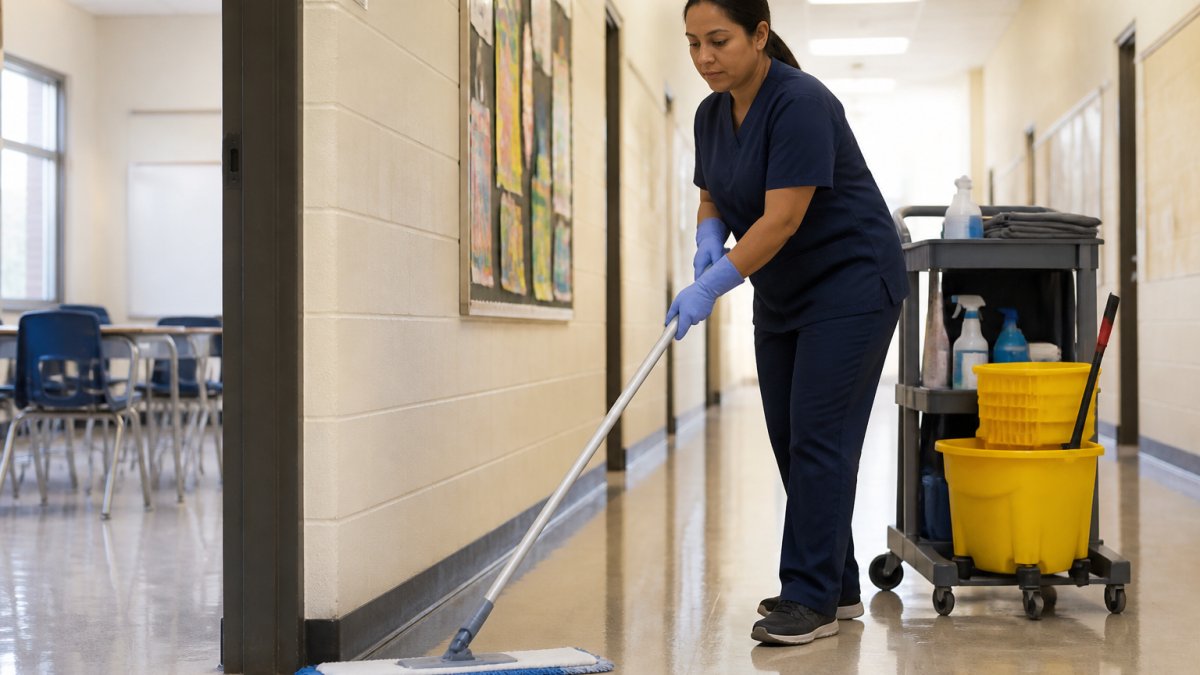
Vacuum carpets thoroughly, including corners and under furniture. Sweep hard floors to remove debris. Then mop with pH-neutral floor cleaner in a systematic pattern from back to exit to prevent tracking dirt across clean floors.
Step 4: Trash Removal, Recycling, and Waste Management
Overflowing trash creates an unprofessional appearance and attracts pests. Waste management is a core component of your commercial cleaning checklist and directly affects facility hygiene and visitor perception.
Establishing Trash and Recycling Removal Schedules
Trash removal frequency depends on facility type, occupancy, and waste volume. High-traffic offices require daily removal; medical facilities and food-service areas demand multiple daily removals; low-traffic warehouses may need removal 2-3 times weekly.
Your commercial cleaning checklist should specify removal frequency by zone:
- Restrooms: Daily minimum; twice daily in high-occupancy facilities
- Breakrooms and kitchens: Daily, or immediately if visibly full
- Office areas and desks: Daily or as-needed based on volume
- Common hallways and lobbies: Daily
- Outdoor receptacles: Daily or per local waste-collection schedule
Recycling bins require the same attention as trash. Many facilities fail because staff misplace recyclables. During cleaning rounds, verify bin contents and sort incorrectly placed items.
Waste Containment and Odor Control
Replace trash liners every time you empty a bin to prevent odors and maintain appearance. For high-volume areas, consider double-bagging to prevent leaks.
For breakrooms and food-preparation areas, use liners rated for food waste. Secure bags properly before removal to prevent leaks onto floors or vehicles.
If odor persists despite daily removal, investigate the source.
Compacting and Safe Removal Procedures
Compact trash to maximize bin capacity and reduce trips, saving time and fuel. Never overstuff bins so tightly that bags tear or become unsafe to remove.
Inspect bags for leaks or damage. If torn or leaking, place inside a second bag before transport to prevent contamination.
For hazardous waste (sharps, chemicals, biohazards), establish separate removal protocols.
Pest Prevention and Sanitation
Inadequate waste management attracts pests. Prevent infestations by removing trash daily, keeping outdoor receptacles sealed, cleaning spills immediately, and inspecting bins for pest activity during cleaning rounds.
If you notice droppings, gnaw marks, or insect activity, document it and report it to facility management immediately. Early detection prevents costly pest-control interventions.
Step 5: Inspection, Quality Verification, and Staff Communication
Without formal inspection, quality degrades and problems go unnoticed. A robust quality-assurance system maintains standards and prevents decline.
Establishing Measurable Inspection Criteria
Your commercial cleaning checklist must define what "clean" means. Measurable criteria eliminate ambiguity and hold staff accountable.
For each task, specify the pass/fail standard:
- High-touch surfaces: No visible dust, fingerprints, or residue when wiped with a white cloth; disinfectant applied and contact time observed (typically 30 seconds to 10 minutes per product label)
- Desks and workstations: All surfaces dust-free, including monitor frames, keyboard undersides, and cable areas; no debris under furniture
- Restroom fixtures: Toilets and urinals free of stains and odors; mirrors streak-free; no dust on light fixtures or vents; floor dry and free of debris
- Floors: No visible dirt, dust, or debris; carpets vacuumed in straight, overlapping passes; hard floors mopped with no standing water or slippery residue
- Trash bins: Empty, liner replaced, interior wiped if needed; no spills or odors
- Breakroom surfaces: All countertops, appliance handles, and cabinet fronts sanitized; microwave interior clean; no food debris or spills
Document these standards in writing and share them with your cleaning team. Ambiguity is the enemy of consistency.
Conducting Post-Cleaning Inspections
Inspections should occur after cleaning but before reopening. Walk through each area systematically using a checklist. Wipe surfaces with a white cloth to check for dust or residue.
Document findings in real time. Note which areas passed and which failed. Photograph problem areas if needed, visual evidence is more persuasive than written notes when discussing performance with staff.
Sign-Off and Accountability Procedures
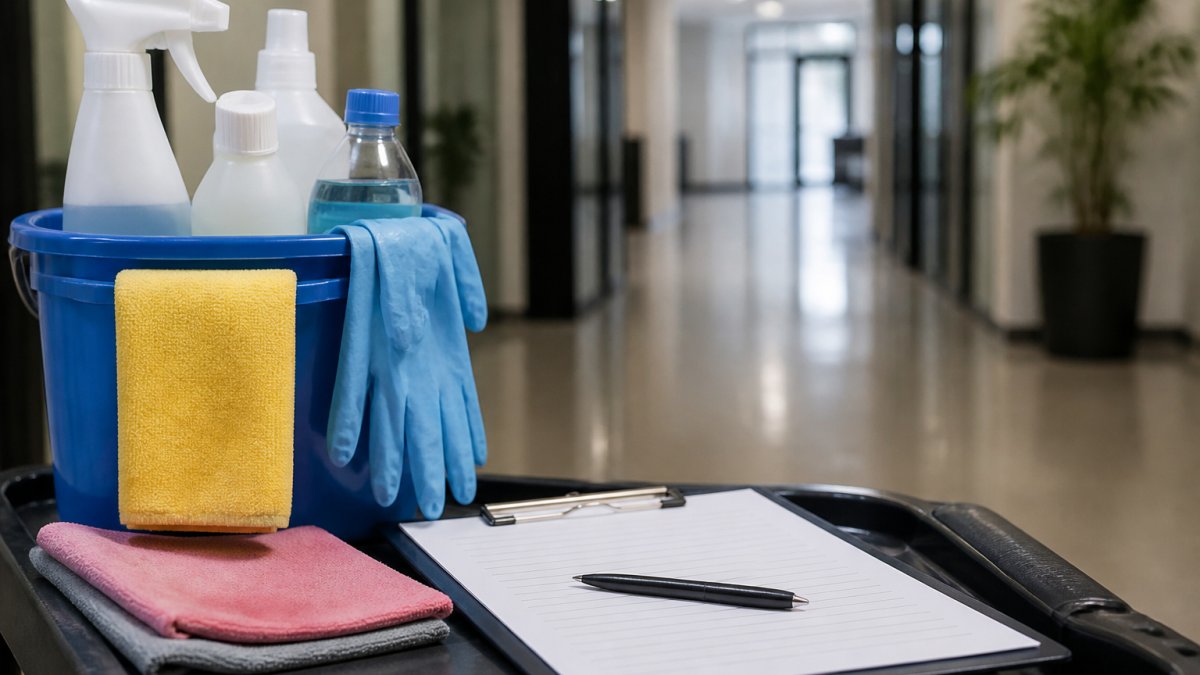
Create a daily sign-off sheet. After inspection, the inspector signs and dates it, confirming all areas met standards.
Maintain sign-off sheets for at least 30 days as proof that cleaning met standards.
Assign one person to own the inspection role for each shift or facility.
If an area fails inspection, have the cleaner re-do the work immediately and re-inspect. Immediate feedback prevents bad habits.
Corrective Actions and Performance Feedback
Provide specific feedback. Instead of "the desk wasn't clean enough," say: "The monitor frame had dust and the keyboard had crumbs underneath."
Track repeat problems. If the same area or task fails inspection multiple times, escalate the issue. This may indicate a training gap, a staffing problem, or an unrealistic standard that needs adjustment.
Quality Scoring and Trend Analysis
For larger facilities, implement a scoring system to track performance over time and identify systemic issues.
Share results with your team. Celebrate improvements and address declines. Transparency builds accountability and shows staff that their work is noticed and valued.
Communication and Continuous Improvement
Hold brief team meetings weekly to review inspection results, discuss problems, and celebrate successes.
Ask staff for input on the commercial cleaning checklist. Frontline workers often have insights managers miss. Adjust procedures based on their feedback.
Document all changes to your commercial cleaning checklist. When you update a standard or procedure, notify all staff and explain the reason.
Office Cleaning Checklist for Managers: Implementation and Accountability
Distribute your commercial cleaning checklist to all staff and walk through it together. Assign specific people to specific areas and schedule regular spot-checks.
Frequency Matrix by Task and Facility Type
| Task | Office Building | Medical Facility | Industrial Warehouse | Frequency |
|---|---|---|---|---|
| High-touch surface disinfection | Daily | Daily | Daily | Every shift |
| Desk and workstation cleaning | Daily | Daily | As needed | Daily or per shift |
| Restroom sanitation | Daily | Daily | Daily | Every shift |
| Floor care (vacuum/mop) | Daily | Daily | 2-3x weekly | Daily or as needed |
| Deep carpet cleaning | Monthly | Monthly | Quarterly | 1x monthly minimum |
| Window and glass cleaning | Monthly | Monthly | Quarterly | 1x monthly minimum |
| Trash and recycling removal | Daily | Daily | Daily | Every shift |
Safety and Chemical Handling Procedures
Your commercial cleaning checklist must include safety protocols. Never mix cleaning products. Store chemicals in clearly labeled containers. Require appropriate personal protective equipment and ensure adequate ventilation. Train staff on spill cleanup and emergency procedures. Document all chemical use.
Creating a Commercial Cleaning Schedule That Works
Start with your commercial cleaning checklist and identify tasks by frequency. Assign staff and time blocks realistically, considering operating hours. Review and adjust quarterly.
Maintaining a clean, professional facility protects your business reputation and your team's health. A well-designed commercial cleaning checklist transforms cleaning from chaotic guesswork into systematic, reliable work. Broughton Commercial Cleaning has helped businesses across Atlanta, Marietta, and Alpharetta implement comprehensive cleaning systems.
Frequently Asked Questions
What should be included in a commercial cleaning checklist?
A comprehensive commercial cleaning checklist must cover daily tasks (high-touch surfaces, desks, keyboards, phones), weekly tasks (restrooms, breakrooms, floors), and specialized areas like trash removal and recycling. The checklist should specify which tasks occur daily versus weekly, identify the equipment and chemicals required, and include quality verification steps. This ensures consistent coverage of all facility areas and maintains workplace hygiene and safety standards.
How often should a commercial office be cleaned?
Most commercial offices require daily cleaning of high-touch surfaces, desks, and common areas to maintain hygiene and workplace safety. Weekly deep cleaning includes restrooms, breakrooms, kitchen surfaces, and floor care. The exact frequency depends on your facility type, foot traffic, and industry standards. Medical facilities and food-service areas may need more frequent disinfection, while storage areas may require monthly attention. A professional cleaning schedule balances cost with cleanliness standards.
What equipment do I need for a commercial cleaning business?
Essential commercial cleaning equipment includes microfiber cloths, mop systems (wet and dry), vacuum cleaners with HEPA filters, disinfectant sprays, toilet brushes, squeegees, and trash removal supplies. You'll also need personal protective equipment (gloves, masks) and safety-approved chemical storage containers. The specific equipment depends on your facility type, offices need different tools than industrial warehouses or medical facilities. Investing in quality equipment reduces cleaning time and improves results.
How can managers check that cleaning tasks are completed?
Implement a daily inspection routine using a checklist system with sign-off requirements. Assign specific staff members to verify completion of each task area and document findings. Use digital tracking tools or printed checklists to record which tasks were done, by whom, and when. Schedule weekly management walk-throughs to spot-check quality and address any missed areas. Clear communication between cleaning staff and management ensures accountability and maintains workplace standards.
What does office cleaning typically include?
Standard office cleaning includes vacuuming and mopping floors, emptying trash and recycling bins, wiping desks and workstations, disinfecting high-touch surfaces (door handles, light switches, keyboards), cleaning restrooms and sinks, and sanitizing breakroom countertops and appliances. Daily cleaning focuses on high-traffic areas and frequently touched surfaces, while weekly tasks include deep cleaning of floors, restrooms, and less-used spaces. The scope varies based on facility size and specific workplace needs.