 comparison
Cleaning Companies for Schools: What to Know
Table of Contents
- What Cleaning Companies for Schools Actually Do
- School Cleaning Checklist: Essential Tasks and Standards
- School Janitorial Services: Coverage and Scheduling
- School Disinfection Services and Health Protocols
- Understanding School Cleaning Cost and Pricing Models
- How to Choose the Right Cleaning Company for Your School
- Frequently Asked Questions
Last Updated: October 17, 2026
What Cleaning Companies for Schools Actually Do
Professional cleaning companies for schools provide far more than basic tidying. They manage comprehensive sanitation across classrooms, hallways, restrooms, cafeterias, and administrative areas while working around student schedules. Professional cleaning companies for schools understand schools operate under unique constraints: limited budgets, strict health standards, and the need to support student wellness.
The scope typically includes daily surface cleaning, floor care, restroom sanitation, and waste management. But the best cleaning companies for schools go deeper: they address high-touch surfaces where germs concentrate, handle specialized cleaning for science labs and art rooms, and coordinate schedules to minimize classroom disruption. This is facility management that directly impacts student attendance and academic performance.
Educational facilities face pressures standard commercial spaces don't: students bring illness into buildings, cafeterias generate daily food debris, and gyms and locker rooms require aggressive disinfection. The right cleaning companies for schools build their protocols around these challenges, not generic commercial standards.
School Cleaning Checklist: Essential Tasks and Standards
When evaluating cleaning companies for schools, know exactly what tasks fall into their scope. A solid school cleaning checklist covers daily essentials and periodic deep work that prevents long-term buildup.
Daily cleaning tasks should include classroom surface wiping, floor sweeping and mopping, trash removal, and restroom sanitization. High-touch areas, doorknobs, light switches, handrails, desk surfaces, require special attention because they're transmission vectors for illness. Cafeteria cleaning after meals is critical: food residue attracts pests and creates sanitation hazards.
Weekly or periodic tasks address areas daily cleaning doesn't reach: window cleaning, carpet vacuuming in office areas, deep restroom scrubbing, and disinfection of shared equipment like computers and athletic gear. Hallways and common areas accumulate grime that needs more aggressive treatment than daily sweeping.
Specialized cleaning varies by school type. Science classrooms with chemical spills need staff trained in hazmat protocols. Art rooms with paint and clay dust require different equipment. Gymnasiums need floor treatments that prevent slipping and extend surface life. Daycare centers require more frequent surface disinfection than middle schools.
The checklist should also address seasonal needs: fall deep cleaning after summer closure, winter disinfection during illness season, spring allergen management, and summer projects like carpet cleaning or floor refinishing.
School Janitorial Services: Coverage and Scheduling
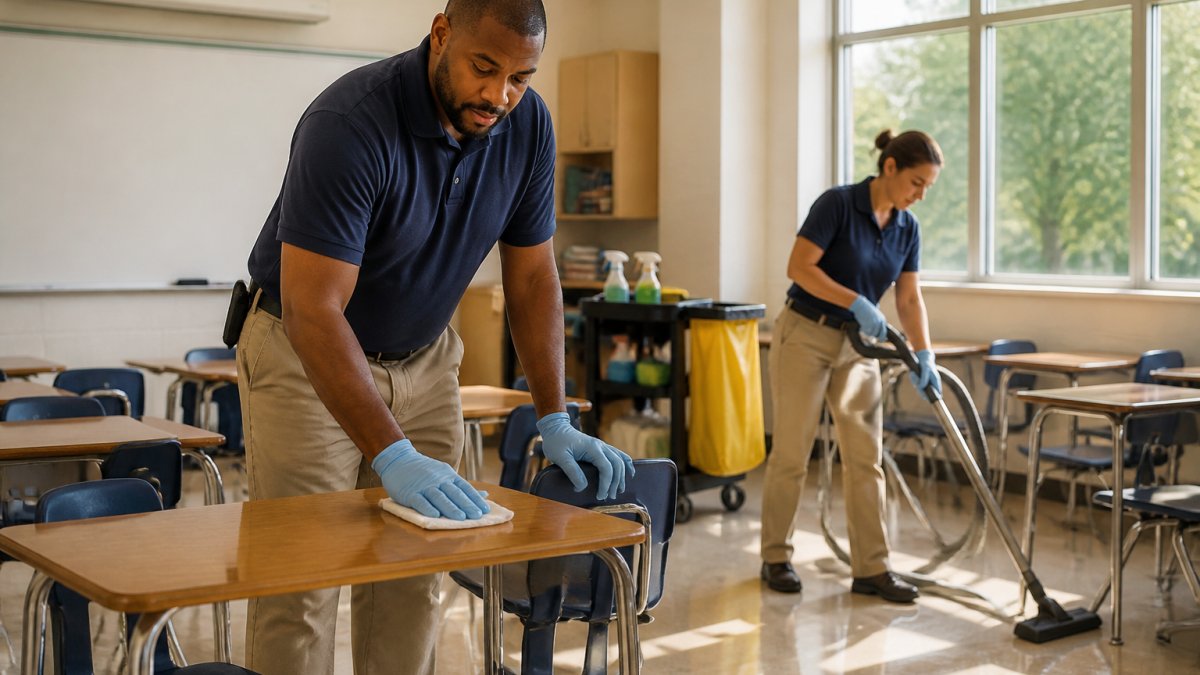
Scheduling is where many cleaning companies for schools stumble. Schools run on tight timelines: fixed class start times, set lunch periods, and evening activities. The best janitorial services build schedules around these constraints rather than forcing schools to adapt.
Most schools require cleaning before classes, during lunch when classrooms are empty, and after dismissal. Some need evening or overnight work for deeper cleaning. Universities may require 24/7 coverage across buildings, and daycare centers often need mid-day sanitization between age groups.
Staffing consistency matters more than most schools realize. The same crew learns your layout, understands problem areas, and builds relationships with staff. Rotating crews create gaps in knowledge and accountability. The best cleaning companies for schools maintain dedicated teams assigned to specific facilities.
Response flexibility is equally important. When illness spreads, you need rapid-response disinfection. When a pipe bursts or a spill occurs, staff must respond immediately, not wait for the next scheduled visit. Quality school janitorial services build emergency protocols into their agreements.
Coverage area determines whether a provider is realistic for your needs. Some cleaning companies for schools operate only in specific regions or serve only certain facility sizes.
School Disinfection Services and Health Protocols
School disinfection services became non-negotiable after 2020 and remain essential for managing seasonal illness. The difference between standard cleaning and true disinfection is significant, and many providers blur that line.
Cleaning removes visible dirt and organic material; disinfection kills pathogens. Schools need both, applied strategically. High-touch surfaces in restrooms, hallways, and cafeterias require disinfection, as do classroom desks and shared equipment during flu season. Outdoor play equipment rarely needs chemical disinfection because UV exposure and weather naturally reduce pathogen load.
The best cleaning companies for schools use EPA-approved disinfectants and follow contact-time protocols. Many disinfectants require 10 minutes of wet contact, a detail many providers ignore, spraying and wiping surfaces dry immediately (the EPA). This creates the appearance of disinfection without actual pathogen reduction.
Health protocols should address specific concerns: daycare centers face different illness patterns than high schools, schools with immunocompromised students may need enhanced protocols, and food service facilities have unique sanitation requirements. The provider should ask detailed questions, not apply a one-size-fits-all plan.
Documentation matters for compliance and liability. The best cleaning companies for schools keep cleaning logs showing what was disinfected, when, and with which products. This protects the school during illness outbreaks and demonstrates proper protocols were followed.
Understanding School Cleaning Cost and Pricing Models
School cleaning cost varies dramatically based on facility size, service frequency, and regional labor rates. Understand the factors that drive cost so you can make informed decisions, compare bids line by line, and see how quotes are built.
Size and complexity are primary cost drivers. A 50,000-square-foot elementary school costs more than a 20,000-square-foot building, and a school with 15 classrooms, a cafeteria, gymnasium, and science labs requires more specialized work than a small facility.
Service frequency directly affects pricing. Daily cleaning costs less per visit but more in total than 3-times-per-week service.
Regional labor costs create significant variation. Urban areas with high minimum wages cost more than rural regions, reflecting actual labor market conditions rather than overcharging.
Most cleaning companies for schools use one of these pricing models:
- Per-square-foot pricing: Fixed rate per square foot cleaned, often ranging from a low to high based on complexity. Useful for budgeting, but ask what is excluded (floor care, windows, event setups).
- Hourly labor plus supplies: Transparent breakdown showing staff hours and material costs separately. Best for schools that want to audit staffing levels and adjust scope.
- Fixed monthly fee: Set price regardless of actual work, best for predictable, consistent facilities. Confirm how change orders are priced when scope grows.
- Hybrid models: Combination of base fee plus charges for specialized services or additional work. Common for districts that want predictable core service plus on-call deep cleaning.
Contract structures matter as much as the rate. Look for a defined term (often 12 months with renewal options), a clear scope exhibit, a change-order process, and termination language. Many schools prefer a trial or performance review before a multi-year agreement.
Hidden fees emerge with some providers: setup fees, supply charges, equipment rental, or premium after-hours rates can significantly increase actual cost. Request a detailed proposal breaking down all charges, and compare bids on the same scope document so you are not pricing different levels of service.
Cost drivers to watch include restroom count (the most labor-intensive area per square foot), cafeteria and kitchen sanitation, gym and locker room disinfection, science lab protocols, after-hours coverage, and whether the provider supplies consumables like paper towels and soap. Each should appear as a line item, not be buried in a single rate.
How to Choose the Right Cleaning Company for Your School
Selecting cleaning companies for schools requires evaluating more than price and availability. The provider you choose directly affects student health, facility condition, and operational peace of mind.
Start with experience verification. How many schools does the provider serve, and for how long? A provider with 20 years of school-specific experience brings knowledge a general commercial cleaner doesn't have.
Verify staffing quality and stability. Ask about background screening, training requirements, and turnover rates. The best cleaning companies for schools employ background-checked, licensed, and insured staff who understand school-specific protocols. Stable teams deliver better results.
Evaluate responsiveness and accountability. How quickly do they respond to urgent needs? What's their process for quality complaints? Do they have a supervisor who regularly inspects the facility? Serious providers build this into their operations.
Check insurance and bonding. Verify the provider carries liability insurance and is bonded, protecting your school if damage or injury occurs.
Assess customization capability. Does the provider adjust their approach to your requirements, or apply a standard template? The best cleaning companies for schools ask detailed questions about your facility, schedule, and priorities before proposing a service plan.
Use a procurement scorecard. Score each bidder on the same criteria so the decision is defensible to administrators and boards:
- Scope fit: Does the proposal cover every area and task in your scope document, including periodic work?
- Staffing plan: How many staff, what hours, what supervision, and what continuity commitment?
- Screening and training: Background checks, onboarding, and ongoing training documented in writing.
- Quality assurance: Inspection frequency, issue-resolution timeline, and sample service-level agreement (SLA) metrics such as restroom inspection pass rate, response time to complaints, and completion rate of scheduled periodic tasks.
- Insurance and compliance: Certificates of insurance, bonding, and adherence to applicable safety and labor requirements.
- References and track record: Verifiable school references and retention of existing clients.
- Contract terms: Term length, renewal, termination, price-adjustment, and change-order process.
Ask for measurable performance commitments. A strong provider puts inspection schedules, complaint-response times, and reporting cadence in the contract. Request sample monthly reports showing what was cleaned, inspected, and resolved.
Request a trial before committing to a long-term contract. It lets you evaluate actual performance without multi-year obligation and reveals whether the provider's promises match their execution.
Frequently Asked Questions
What should a school cleaning checklist include?
A comprehensive school cleaning checklist covers classrooms, hallways, restrooms, cafeterias, and high-touch surfaces like door handles and light switches. It should include daily tasks (sweeping, trash removal, restroom sanitization), weekly tasks (floor stripping, window cleaning), and periodic deep cleaning. Professional cleaning companies for schools tailor checklists to your facility's layout and student population size. The checklist should specify which areas receive disinfection and how often.
How much does it cost to clean a school?
School cleaning cost depends on facility size, frequency of service, and the scope of tasks. Factors affecting pricing include square footage, number of classrooms and restrooms, whether you need daily or weekly service, and if specialized disinfection is required. Most cleaning companies provide customized quotes based on your specific needs rather than standard rates. Request written quotes from multiple providers to compare value and service scope.
Do school cleaning companies provide disinfection services?
Yes, most professional school cleaning companies offer disinfection services as part of their offerings or as an add-on. School disinfection services typically target high-touch surfaces, restrooms, and common areas using EPA-approved disinfectants. Many companies increased disinfection protocols in recent years to address health concerns. Ask potential providers about their disinfection products, frequency options, and whether they follow current health department guidelines.
How often should a school be professionally cleaned?
Most schools benefit from daily janitorial services during the school year to maintain a healthy learning environment. High-traffic areas like restrooms and cafeterias may need multiple cleanings per day. Classroom and desk cleaning typically occurs daily or after each class period in some facilities. Many schools also schedule deep cleaning during breaks or summers. Your cleaning company should help you establish a schedule that fits your budget and maintains standards for student and staff health.
What qualifications should school cleaning staff have?
Professional school cleaning staff should be background-checked, trained in proper use of commercial cleaning equipment and chemicals, and knowledgeable about sanitation standards. Many providers employ licensed and insured staff who understand facility-specific protocols, especially for handling hazardous materials or working around sensitive areas. Staff should receive ongoing training in new disinfection methods and safety practices. Verify that your cleaning company screens employees and maintains current certifications.