 how-to
Clean, Fresh, Hazard-Free Environment for Accounting
Table of Contents
- Why a Clean, Fresh, and Hazard-Free Environment Matters for Accounting Practices
- Hazard Assessment for Accounting Practices
- Your Office Cleaning Checklist for Accounting Workspaces
- Daily Office Cleaning Checklist for Accounting Teams
- Weekly Office Cleaning Schedule and Role Ownership
- Office Safety Checklist for Hazard Prevention
- Confidential Records and Secure Cleaning Procedures
- Conclusion: Making the Hazard-Free Environment Stick
- Frequently Asked Questions
Last Updated: October 15, 2026
Why a Clean, Fresh, and Hazard-Free Environment Matters for Accounting Practices
A clean, fresh, and hazard-free environment for accounting practices is not about appearances. At Broughton Commercial Cleaning, we have spent decades cleaning offices, medical suites, and industrial sites, and we can tell you plainly: accounting firms have needs that a generic vacuum-and-dust visit will never cover.
Think about what sits in an accounting office. Paper records. Signed tax documents. Payroll files. Client bank details. Now think about who walks through that space every day: staff, clients, couriers, and cleaning crews. Every one of them is a possible point of failure.
The stakes are higher than most office managers assume. Financial records and bookkeeping files carry legal retention duties, and a misplaced or exposed document can trigger real problems. A hazard-free environment keeps those files secure, keeps staff healthy, and keeps your audit readiness intact.
Below, we break down exactly how to build that environment, section by section, with checklists you can hand to your team today.
Hazard Assessment for Accounting Practices
Start with a walk-through. A hazard assessment is a documented inspection of your workspace that identifies risks before they cause harm. For accounting practices, that means looking at three categories: physical hazards, chemical hazards, and information hazards.
Walk your office and note:
- Trip hazards: loose cables under desks, stacked file boxes in walkways, wet floors near entrances
- Electrical safety: overloaded power strips, damaged cords behind copiers and servers
- Chemical exposure: cleaning products stored near food areas or in unventilated closets
- Ergonomic risks: poorly adjusted chairs, monitors at the wrong height, cluttered desks
- Information risks: unattended documents, unlocked file cabinets, unsecured shred bins
Write down what you find and assign each item an owner and a fix date. Repeat the assessment quarterly. This is the foundation everything else builds on.
Your Office Cleaning Checklist for Accounting Workspaces
An office cleaning checklist for managers should cover every surface a client or staff member touches, plus the areas where records live.
The unique angle here is that cleaning in an accounting office is a confidentiality control as much as a hygiene task. Every wipe-down, every bin empty, and every desk clear is also a chance to expose or secure client data. Build the checklist around three zones, and treat each zone differently.
Zone 1: Client-facing areas (lobby, meeting rooms, reception)
- Wipe door handles, light switches, and reception counters at least once daily
- Disinfect shared pens, signature pads, and tablet screens between client meetings
- Clear and wipe meeting tables after each appointment so no prior client's paperwork is visible to the next
- Empty waste bins and confirm no client documents were left in open trash
Zone 2: Staff workstations and shared equipment
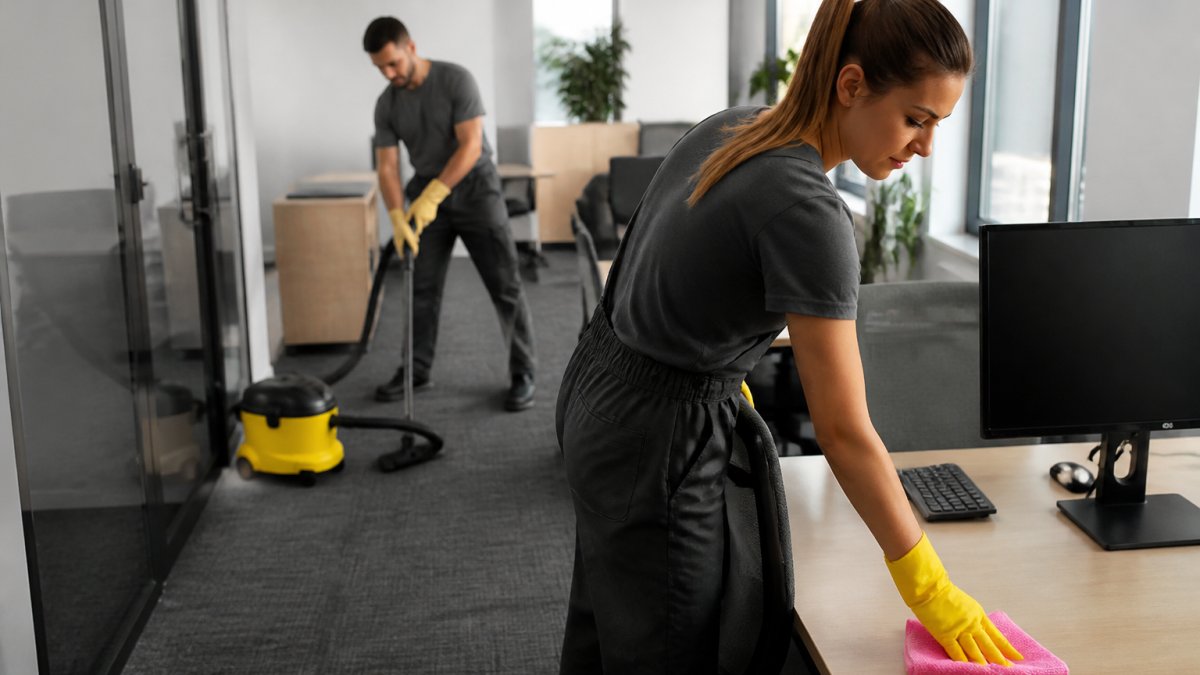
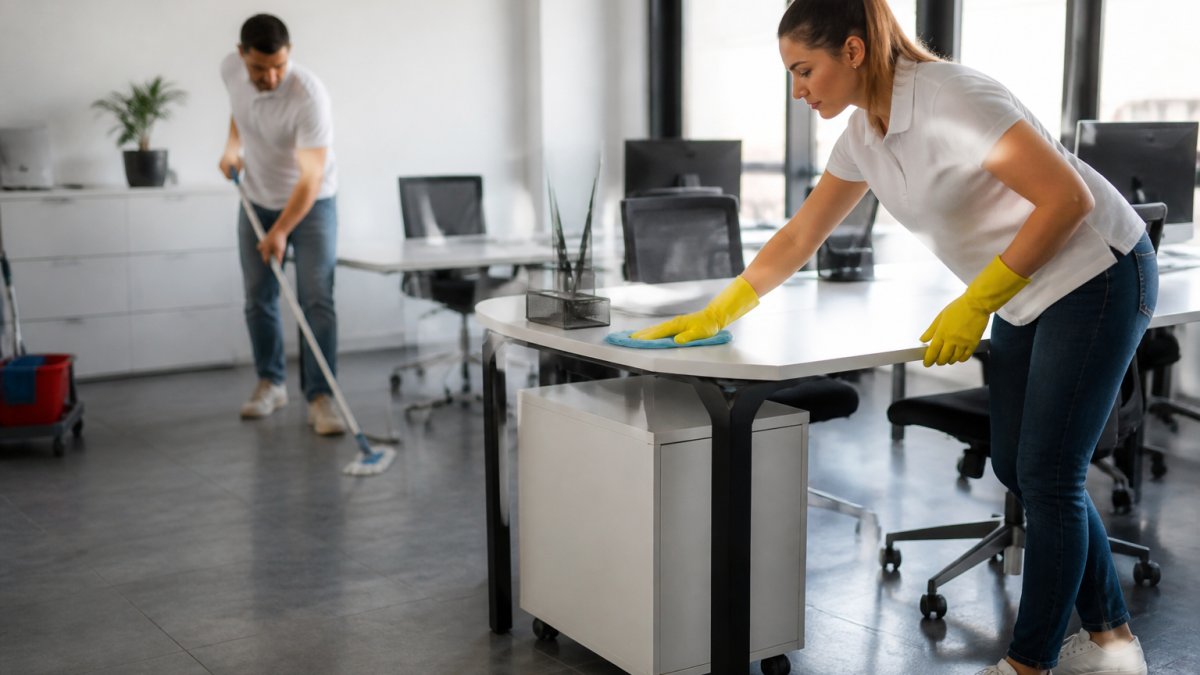
- Wipe desks, keyboards, mice, and monitor arms daily
- Disinfect shared printers, copier panels, and scanner glass, which are the highest-touch shared surfaces in most firms
- Dust monitor tops, cable trays, and under-desk surfaces weekly to control dust that circulates through the office
- Keep disinfecting wipes at every shared station so staff can clean as they go
Zone 3: Records and file areas
- Wipe file cabinet exteriors and handles, but never open a cabinet or read a document
- Vacuum or damp-mop file room floors on a set schedule to reduce paper dust
- Confirm shred bins are locked and that only the authorized shredding vendor empties them
- Check that no loose paper is left on copiers, scanners, or fax trays at end of day
Shared equipment deserves special attention. A single keyboard or copier panel can pass germs between an entire team, and a single unattended printout can expose a client's tax return.
Product selection matters as much as the checklist. Choose cleaners labeled for the surface and the soil, and prefer products certified through the Environmental Protection Agency's Safer Choice program where a safer alternative performs as well.
Daily Office Cleaning Checklist for Accounting Teams
A daily office cleaning checklist keeps small tasks from becoming big problems. Most of these take minutes, and they protect both employee health and client confidentiality.
End-of-day tasks (assign to a closing lead, not to "everyone")
- Clear desks of loose papers and file them or place them in a locked shred bin
- Wipe down personal workspaces and shared keyboards with a disinfectant wipe
- Clear the shared printer and scanner output trays so no client document sits overnight
- Empty shred bins if they are more than half full, and confirm the bin is locked
- Wipe break room counters, handles, and appliance fronts
- Check that all confidential information is locked in cabinets or a secure room
- Walk the floor for trip hazards: loose cables, stacked boxes, wet spots near entrances
- Log any spill, damage, or safety issue and route it to the office manager
The mechanism that makes it stick: a daily log with initials
A checklist only works if someone signs it. Keep a one-page daily log at the front desk with the date, each task, and a blank for initials. The closing lead initials each line before leaving.
Tie the daily list to your hazard assessment
Your quarterly hazard assessment (covered earlier) should feed this daily list. If the assessment flags a frayed cord behind the copier, the daily walk should confirm it was replaced.
A note on indoor air quality
Daily tasks affect air quality more than most teams realize.
Weekly Office Cleaning Schedule and Role Ownership
A weekly office cleaning schedule works only when someone owns each task. Assign names, not teams. "Everyone" means no one.
A simple weekly rotation looks like this:
| Task | Frequency | Owner |
|---|---|---|
| Deep clean of break room | Weekly | Office manager |
| Vacuum under desks and edges | Weekly | Cleaning vendor |
| Wipe down file room surfaces | Weekly | Records lead |
| Inspect and restock supplies | Weekly | Admin assistant |
| Review incident and inspection logs | Weekly | Practice administrator |
| Check fire extinguishers and exits | Monthly | Facility lead |
| Full hazard assessment | Quarterly | Office manager |
Role ownership solves the biggest complaint we hear from prospects: inconsistent service. When a task has a name beside it, it gets done. When it does not, it slips.
For firms that would rather not manage this in-house, a commercial cleaning partner can take the recurring tasks off your plate. Broughton Commercial Cleaning offers day, evening, and overnight shifts, so the work happens without disrupting your client hours.
Office Safety Checklist for Hazard Prevention
An office safety checklist for hazard prevention covers the physical risks that cleaning alone will not fix. Workplace safety in an accounting office is quieter than on a factory floor, but the hazards are real.
Run through these each month:
- Test smoke and carbon monoxide detectors
- Confirm fire extinguishers are charged and accessible
- Check that exit routes are clear of boxes and furniture
- Inspect power cords and replace any that are frayed
- Verify first aid kits are stocked
- Confirm cleaning chemicals are stored in a locked, ventilated closet
- Review that all staff know the incident reporting process
Ventilation and dust control belong on this list too. Poor indoor air quality causes headaches, fatigue, and missed work. Open windows when weather allows, keep HVAC filters changed on schedule, and choose low-toxicity cleaning products.
The Occupational Safety and Health Administration guidance on workplace safety outlines employer duties for maintaining safe conditions, and the Environmental Protection Agency's Safer Choice program helps you pick cleaning products with fewer harsh chemicals.
Confidential Records and Secure Cleaning Procedures
Secure cleaning is the part most cleaning companies get wrong. Your cleaning crew has after-hours access to every desk, every file cabinet, and every shred bin in the building. That access needs rules.
Set these procedures in place:
- Background checks: every cleaner who enters your space should be background-checked, licensed, and insured
- No-touch rule: cleaners do not open file cabinets, read documents, or move paper records
- Locked storage: all confidential information stays locked before the crew arrives
- Shred bin protocol: shred bins are emptied only by authorized shredding vendors, never by general cleaning staff
- Sign-in logs: every after-hours visitor signs in and out
- Supervision: a named supervisor manages each crew and is your point of contact
Broughton Commercial Cleaning builds these safeguards into every engagement. Our staff are background-checked, licensed, insured, and bondable, and we treat your privacy and confidentiality as part of the job, not an add-on.
This is where a cheap quote usually falls apart. Firms that cut corners on vetting save money up front and expose client data later. For accounting practices, that trade is never worth it.
Conclusion: Making the Hazard-Free Environment Stick
The hard part is not building the checklist. It is keeping it alive after the first month.
Schedules drift. Owners change roles. New staff never learn the routine. Within a quarter, the office is back to where it started.
Broughton Commercial Cleaning exists to prevent that drift. We provide customizable janitorial services with flexible day, evening, and overnight scheduling. Our background-checked, licensed, insured, and bondable crews show up reliably and follow your procedures, not a generic script. You get upfront written quotes in plain language, so you know what you are paying for before work begins.
If you want a clean, fresh, and hazard-free environment that actually holds up, contact us today and let our team build the plan around your practice.
Frequently Asked Questions
What should an office cleaning checklist include for an accounting practice?
An office cleaning checklist for accounting should cover daily high-touch surfaces, shared equipment like keyboards and calculators, and secure handling of paper records. Include separate ledgers and client files in your secure areas list. Add weekly tasks such as dusting vents, checking trip hazards, and inspecting ventilation. A hazard assessment for your specific layout helps you tailor the checklist to your firm's needs.
How often should an accounting office be cleaned?
Daily cleaning is standard for high-touch areas, break rooms, and restrooms. A weekly office cleaning schedule should cover deeper tasks like dusting vents, cleaning shared equipment, and inspecting for trip hazards. Monthly or quarterly tasks include carpet care, window cleaning, and reviewing your office safety checklist. Accounting practices handling confidential information may need more frequent secure shredding and desk cleaning.
How should confidential paperwork be handled during office cleaning?
Confidential paperwork should never be left on desks or in open bins. Use locked shredding consoles and instruct cleaning staff to avoid touching any documents. Your cleaning procedures should specify that only designated employees handle files, and that secure bins are emptied by a bonded vendor. This protects client financial records and keeps your practice audit-ready.
How can managers maintain a fresh-smelling office without disrupting work?
Focus on source control rather than air fresheners. Empty trash daily, clean break room appliances, and address moisture issues promptly. Improve indoor air quality with proper ventilation and low-toxicity cleaning products. Avoid strong fragrances that can bother employees or clients. A weekly office cleaning schedule that includes vent dusting and carpet care helps keep odors from building up.