 how-to
Managing Commercial Cleaning Service Expectations
Table of Contents
- Why Commercial Cleaning Expectations Break Down
- Define the Commercial Cleaning Scope of Work Before Day One
- Build a Commercial Cleaning Quality Checklist
- Cleaning Service Performance Metrics That Actually Matter
- Communicating With a Commercial Cleaning Company
- Service Recovery: Missed Tasks, Complaints, and Staffing Changes
- The First 30 Days: A Realistic Onboarding Timeline
- Frequently Asked Questions
Last Updated: October 12, 2026
Why Commercial Cleaning Expectations Break Down
Most commercial cleaning relationships don't fail because of bad work. Managing commercial cleaning service expectations starts long before a mop touches the floor, and it comes down to one thing: writing down what both sides expect, then measuring against it.
At Broughton Commercial Cleaning, we've seen this play out for decades across offices, medical facilities, and industrial sites.
Here's what most guides get wrong: they treat expectations as a feeling, not a document. But a clean environment is measurable.
The breakdown usually traces back to four gaps:
- Scope gaps: The contract says "general cleaning" but never lists what that includes.
- Frequency gaps: Nobody agreed on daily versus weekly tasks.
- Quality gaps: No checklist, no inspection, no standard.
- Communication gaps: Problems surface weeks after they start.
The U.S. General Services Administration's facility management guidance treats scope definition as the foundation of any service contract. That's not bureaucracy.
Define the Commercial Cleaning Scope of Work Before Day One
A commercial cleaning scope of work is the written list of every task, how often it happens, and who is responsible for it. Get this right and most disputes never happen. Get it wrong and no amount of goodwill saves the relationship.
For our clients, we put everything in plain language. No vague phrases like "as needed." No hidden line items. Just tasks, frequency, and standards.
Routine Tasks vs. Periodic Service
Routine tasks happen on a set schedule, usually daily or weekly. Periodic service happens on a longer cycle.
| Task Type | Examples | Typical Frequency |
|---|---|---|
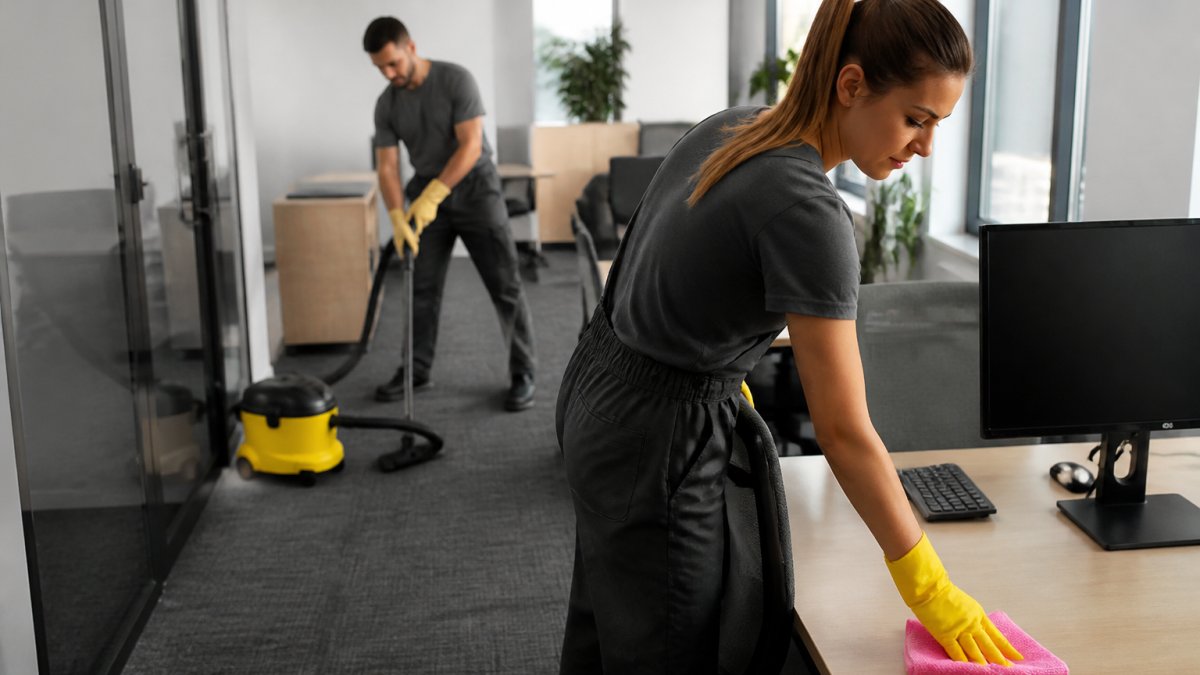
| Routine | Trash collection, restroom sanitation, vacuuming, floor mopping | Daily or weekly |
| Periodic | Carpet cleaning, deep cleaning, window washing, floor stripping and waxing | Monthly, quarterly, or yearly |
The mistake we see most often: clients assume periodic service is included in the routine price. It usually isn't. Spell it out.
Client and Provider Responsibilities
Both sides carry duties. Confusion here causes most missed-task complaints.
The provider handles:
- Cleaning supplies and equipment
- Trained, background-checked staff
- Supervision and quality checks
- Scheduling and coverage
The client handles:
- Access, keys, and alarm codes
- A secure place to store supplies
- Reporting issues promptly
- Reasonable notice for schedule changes
Build a Commercial Cleaning Quality Checklist
A commercial cleaning quality checklist turns "does it look clean?" into a pass-or-fail inspection. It's the single most useful tool for keeping standards consistent over months and years.
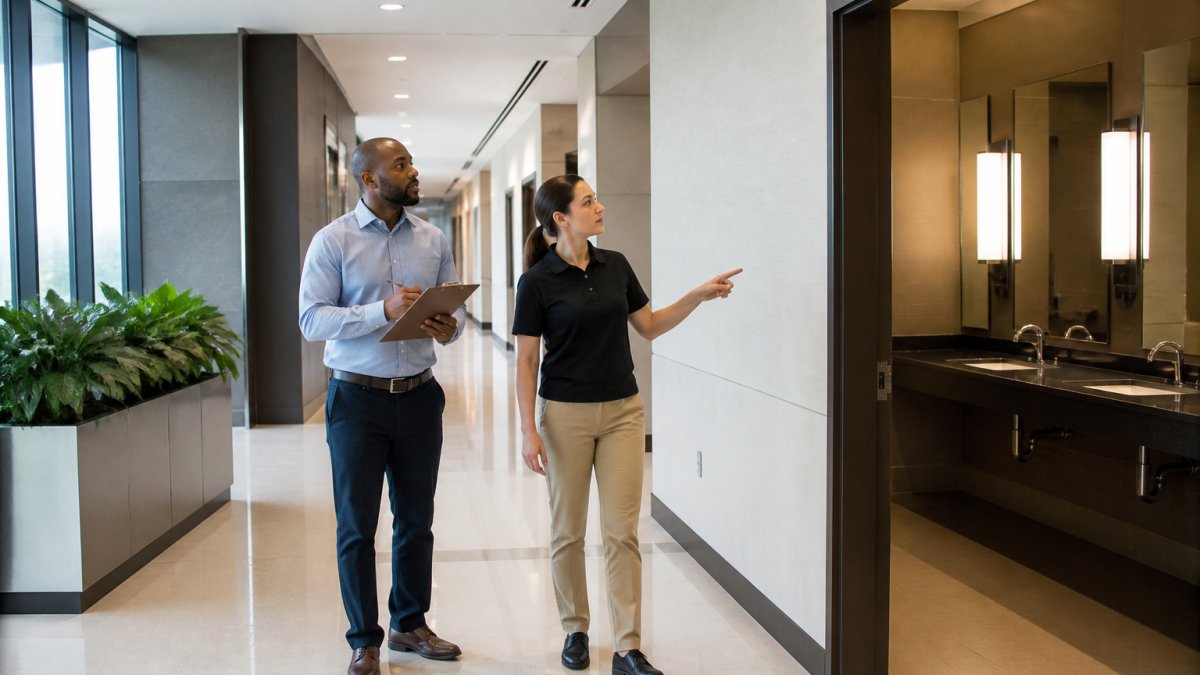
Build it with your provider, not for them. Walk the building together. Note every area, then set the standard for each one.
High-Traffic Areas, Restrooms, and Floor Care
These three areas drive most complaints. Inspect them first, every time.
- High-traffic areas: Lobby, entrances, elevators, break rooms. Check for trash, smudges, and debris.
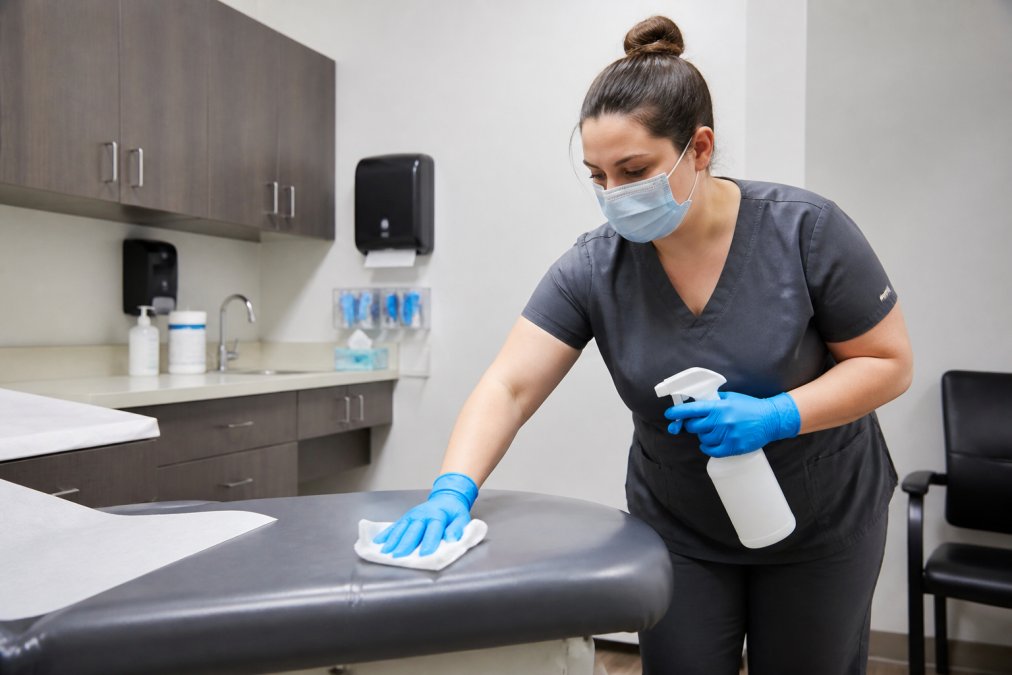
- Restrooms: Sanitation, restocking, odor control, and fixture shine. This is the number one complaint area.
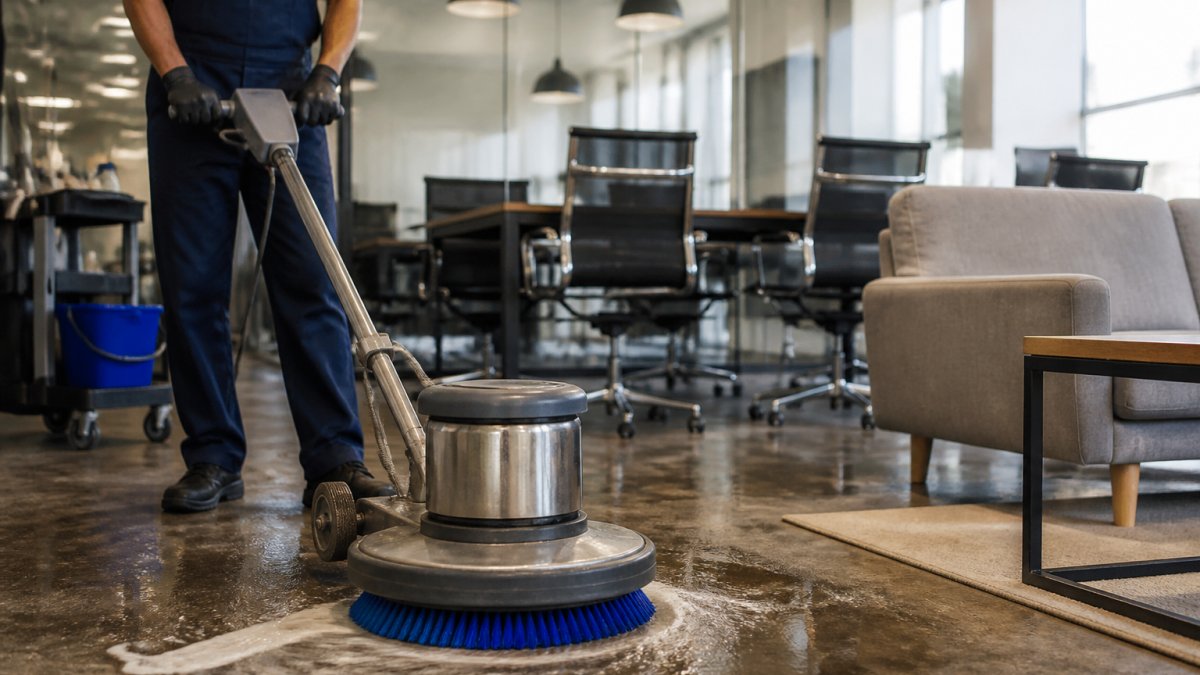
- Floor care: Mopping, spot treatment, and carpet cleaning. Dull floors read as "dirty" even when they're sanitary.
A simple scoring system works best. Rate each area 1 to 5. Anything below a 3 triggers a re-clean within 24 hours.
Cleaning Service Performance Metrics That Actually Matter
The metrics that matter are the ones tied to your checklist and written into a service-level agreement (SLA), not vanity numbers. An SLA turns "we expect it clean" into a pass-or-fail standard both sides can point to. Track a small set and review them monthly.
The International Sanitary Supply Association's cleaning standards offers benchmarks for measuring cleanliness. Use them to set your own targets.
Sample KPIs and Service-Level Standards
A workable SLA usually covers five measurable areas. Set the target with your provider, then hold both sides to it.
| KPI | What It Measures | Common Target |
|---|---|---|
| Inspection score | Average checklist score per visit | 4 of 5 or higher |
| Missed-task rate | Tasks not completed as scheduled | Under 2% per month |
| Response time | Hours from complaint to acknowledgment | Under 4 business hours |
| Resolution time | Hours from complaint to verified fix | Under 24 hours |
| Consistency | Visit-to-visit score variation | No more than 0.5 points |
These are starting points, not universal law. A medical facility may demand tighter restroom standards than a warehouse office. The point is to pick numbers, write them down, and measure the same way every month.
Inspection Criteria and Scoring
An inspection only works if the criteria are fixed. Walk the building with your provider and define what a passing score looks like for each area before service starts.
- Restrooms: Fixtures clean and shining, no odor, all dispensers stocked, floors dry and free of debris.
- High-traffic areas: Lobby, entrances, and elevators free of trash, smudges, and tracked-in dirt.
- Floor care: Mopped surfaces even and dry, carpets spot-treated, no dull buildup.
- Waste: All bins emptied, liners replaced, no overflow.
Score each area 1 to 5. Anything below a 3 triggers a re-clean within 24 hours. Record who inspected, when, and what failed.
Escalation Thresholds
Not every miss needs a phone call. Set thresholds so small issues stay small and serious ones get attention fast.
- Single low score: Note it on the next inspection. No escalation.
- Two consecutive low scores in one area: Provider supervisor reviews within 48 hours.
- Missed-task rate above target for two months: Formal review meeting and a written corrective plan.
- Safety or sanitation failure in a restroom or medical area: Immediate notification and same-day correction.
Put these thresholds in the SLA. When everyone knows what triggers a review, disputes turn into checklists.
Put the KPIs in a shared sheet. Both sides see the same numbers, and the monthly review becomes a five-minute conversation instead of an argument.
Communicating With a Commercial Cleaning Company
Clear communication prevents small problems from becoming contract disputes. Set a rhythm and stick to it.
A common approach is a short weekly check-in and a longer monthly review. The weekly call covers immediate issues.
Communicating with a commercial cleaning company works best when you name one contact on each side. One facility contact. One provider supervisor. No phone trees.
- Report issues the same day, not at month-end.
- Use photos when describing a problem.
- Confirm schedule changes in writing.
- Share employee feedback openly.
Service Recovery: Missed Tasks, Complaints, and Staffing Changes
Every cleaning company misses a task sometimes. What separates good providers is how fast they fix it and whether the fix sticks. Build a recovery process before you need it, and write it into the contract.
A Four-Step Recovery Process
Our process has four steps, each with an owner and a deadline.
- Report it. Anyone on the client side can log an issue through one channel, usually a shared email or a simple form. Include the date, the area, and a photo if possible. The provider acknowledges within 4 business hours.
- Assign it. The provider supervisor names the person responsible for the correction and the deadline. Routine misses get fixed within 24 hours. Safety or sanitation issues get same-day attention.
- Verify it. The client contact confirms the fix, or the next inspection scores the area. A fix is not closed until someone checks it.
- Review it. At the monthly review, ask why it happened. Was it a training gap, a supply shortage, or a scheduling miss? Adjust the plan so the same issue does not repeat.
Complaint Log and Corrective Action
Keep a running log of every complaint, the date, the area, the cause, and the fix. After two months, patterns show up. If the same restroom fails three times, the problem is not the cleaner.
For repeated issues, ask for a written corrective action plan. It should state the root cause, the change being made, and the date the change takes effect.
Staffing Changes and Coverage
Vacations, turnover, and sick days happen. The question is not whether your building depends on one person showing up, but whether the provider has a plan for when that person does not.
Ask three questions before you sign:
- How many trained backups cover this site?
- What is the notice period for a regular cleaner's absence?
- Who supervises the substitute, and how is quality checked on their first visit?
A reliable company has trained backups ready and a supervisor who walks the site after a substitution. If a provider cannot explain their coverage plan, that is a red flag.
When Access, Occupancy, or Frequency Changes
Expectations shift when the building does. A new tenant, a renovation, or a holiday schedule changes what "clean" requires. Agree in advance on how changes are communicated and priced.
- Give written notice of access or occupancy changes as far ahead as possible.
- Confirm any frequency change in writing, with the effective date and the price impact.
- Re-walk the site after a major change to confirm the scope still fits.
The First 30 Days: A Realistic Onboarding Timeline
A structured first month sets expectations and catches problems early. Here's the timeline we use.
| Week | Focus | Goal |
|---|---|---|
| Week 1 | Walkthrough and scope review | Confirm every task and area |
| Week 2 | First inspections | Score the checklist, fix gaps |
| Week 3 | Adjust the plan | Tune frequency and timing |
| Week 4 | Full review | Agree on metrics and rhythm |
By day 30, both sides should have a shared checklist, a set of metrics, and a communication schedule.
Managing commercial cleaning service expectations comes down to one habit: writing things down and checking them.
At Broughton Commercial Cleaning, we build that structure into every contract.
Frequently Asked Questions
What is the 5 5 5 rule for cleaning?
The 5 5 5 rule is a quick daily reset: spend five minutes in five high-traffic zones, five days a week. For a commercial facility, those zones are usually the lobby, restrooms, break room, main hallway, and reception desk. It works as a supplement to contracted commercial cleaning, not a replacement. Use it to keep visible areas presentable between scheduled visits, then let your provider handle deep cleaning, floor care, and waste management on the agreed schedule.
What should be included in a commercial cleaning scope of work?
A solid scope of work names every task, its frequency, and the quality standard for each area. Break it into daily cleaning (restrooms, trash collection, high-traffic areas), weekly cleaning (dusting, vacuuming, floor mopping), monthly cleaning, and periodic service like carpet cleaning or deep cleaning. Add operating hours, access procedures, and who supplies consumables. Anything left vague becomes a dispute later, so put it in writing and have both sides sign off before the first crew arrives.
How do you measure the quality of a commercial cleaning service?
Use a written quality checklist plus a small set of performance metrics: inspection scores on a defined scale, restroom sanitation checks, complaint response time, and on-time arrival rate. Walk the facility weekly with your provider and score the same items each time so trends are visible. Most disputes come from mismatched expectations rather than poor work, so tie each metric to a specific task in the scope of work and review results monthly.
What should you do if a cleaning company does not meet expectations?
Document the issue with photos, dates, and the specific scope item that was missed, then send it through the channel named in your contract. A good provider responds with a corrective action and a re-inspection within a set window. If the same task fails repeatedly, request a written plan with timelines. Check your contract's termination clause and price adjustment terms before escalating, and keep the conversation focused on measurable standards rather than general dissatisfaction.